
How to Check Car Fines and Traffic Penalties and Get Them Reduced
When you drive, there comes a day when a piece of mail or a single text message makes your heart sink. Phrases like "Notice of Violation" or "Advance Notice of Fine" leave you unsure of how much you owe or where to even check. Yet many people mistake administrative fines and traffic penalties for the same thing and pay blindly, or conversely leave them unattended and end up facing surcharges and even having their license plate seized. This article organizes, with a focus on the actual procedures, everything from the difference between the two to the lookup channels, the reduction and objection systems, and the disadvantages of non-payment.
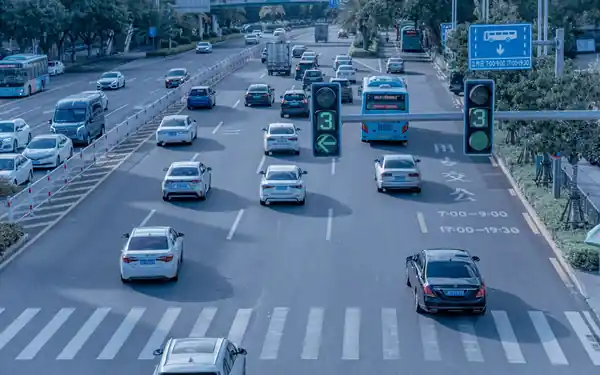
Administrative Fines vs. Traffic Penalties: What's the Difference?
The names are similar and confusing, but their nature differs. The crux is whether the person who committed the violation is identified.
- An administrative fine (gwataeryo) is an administrative disposition imposed on the vehicle's registered owner when the driver is not identified at the scene, as with an unmanned enforcement camera. Because it is levied on the "car" rather than the person, it generally does not carry demerit points.
- A traffic penalty (beomchikgeum) is imposed on the individual driver when a police officer catches them directly at the scene. As a disposition for a Road Traffic Act violation, it may come with demerit points depending on the violation.
So the same speeding offense becomes an administrative fine if caught by an unmanned camera, and a traffic penalty if caught directly by a police officer. Some violations are notified in a way that lets you choose whether to pay as an administrative fine or a traffic penalty, and you should decide by weighing both the presence of demerit points and the difference in amount. For instance, accumulating demerit points can later affect a license suspension or revocation, or even your insurance premium, so situations arise where you cannot decide based on the immediate amount alone. Because the specific amounts and demerit points vary by violation and by the applicable system, it is safest not to assume, and always to verify your own case through an official channel.
To summarize, administrative fines are typically imposed "on the car's owner, without demerit points," while traffic penalties are imposed "on the caught driver, together with demerit points." Remembering just this one line will make it far quicker to grasp your situation when you receive a notice.
Where to Check: eFine and Wetax
The lookup channel for charges levied against you differs by the imposing authority.
- National Police Agency Traffic Civil Service 24 (eFine, efine): Here you can check administrative fines and traffic penalties from police enforcement such as speeding and signal violations, unpaid balances, and demerit points. You verify after identity authentication such as a joint certificate, and it is available on both web and app.
- Wetax: This is used to look up and pay administrative fines imposed by local governments, such as illegal parking and stopping (non-tax local revenue). Locally enforced cases are often checked through the relevant local government or Wetax.
In short, remember eFine for police enforcement and Wetax for local-government enforcement (parking and stopping). If you're unsure which applies, check both, and also refer to the imposing agency and its contact number written on the notice. Both channels provide lookup and payment online for free, so there is no need to go through a private service that charges a separate fee. If your address has changed due to moving or a title transfer, it is easy to miss a mailed notice, so if you own a vehicle, it is advisable to log in directly from time to time and check for any unpaid balances.

The Early-Payment Reduction System
For administrative fines, there is a voluntary (early) payment reduction system that cuts a set percentage if you pay on your own within a designated period. If it is a clear-cut violation with no room to dispute, handling it during the reduction window is generally more advantageous than missing the deadline and incurring a surcharge. The notice often states the voluntary payment deadline together with the reduced amount, so check the dates first. However, the size of the reduction and the conditions for applying it vary by violation type, system, and timing, and are not applied identically to every case. Also, if you plan to file an objection, it is best to check in advance how voluntary payment affects that right. The exact reduced amount and conditions must be verified for your own case on the notice and on eFine or Wetax, and it is best not to guess arbitrarily that "it'll probably be cut by about this much."
If You Have an Objection: The Objection Procedure
If you judge the charge to be unjust, there is a path to dispute it. For an administrative fine, you can file an objection with the imposing agency within a set period after receiving the notice, and once the objection is accepted, it may proceed to a determination by the competent court (an administrative-fine trial). For a traffic penalty, refusing to comply with the notice disposition leads to a separate procedure such as a summary judgment.
Because objections have deadlines and requirements, if you intend to dispute, you must first check the procedure and deadline before simply postponing payment. Verify the specific application method and period through the notice's guidance, the imposing agency, and eFine or Wetax.
The Disadvantages of Non-Payment
The thing to avoid most is neglect. Miss the deadline and the following disadvantages pile up in stages.
- Surcharge imposition: If you don't pay, a surcharge is added to the original amount, and if the delinquency continues, an additional aggravated surcharge may be tacked on.
- Property seizure: For long-term delinquency, assets such as bank deposits and wages may be seized.
- License plate seizure: If you are delinquent on vehicle-related fines for a long time, your license plate may be seized (confiscated), blocking you from driving at all.
In the end, postponing only increases the burden. If there is nothing to dispute, it is more advantageous to handle it during the voluntary payment window.

Common Mistakes
- Thinking administrative fines and traffic penalties are the same: They differ in demerit points and in whom they target. If you receive a notice offering a choice, you must decide with demerit points in mind.
- Trusting only the notice and never looking it up: Mail can be lost or arrive late. Making a habit of checking unpaid balances directly on eFine and Wetax is safer.
- Leaving it unattended because you're busy: It snowballs with surcharges, seizure, and license plate confiscation.
- Relying on fee-charging agents: Lookup and payment can be done directly for free through the official channels.
Frequently Asked Questions
If I pay an administrative fine, do demerit points accumulate too?
An administrative fine is generally imposed as an amount only, without demerit points. Demerit points mainly attach to traffic penalty dispositions where the driver is identified. That said, it can vary by violation, so check your own case on eFine.
How much of a reduction do I get for voluntary payment?
The reduction system itself exists, but the size of the reduction and its conditions vary by violation type, system, and timing. The exact amount must be verified using the figure shown for your own case on the notice and on eFine or Wetax, and it is hard to pin down as a uniform percentage.
The charge is unjust—how do I dispute it?
You can file an objection with the imposing agency within the set deadline, and for administrative fines this may later proceed to a court determination. Since there are deadlines and requirements, it is best to check the procedure first before deciding whether to pay.
All content is fact-checked under our editorial standards.