
How Alzheimer's Is Diagnosed — From Cognitive Testing to Brain Imaging and Biomarkers
Diagnosing Alzheimer's is not something a single test settles; it is a stepwise differential process that runs from history-taking and cognitive testing to blood tests, brain imaging, and, when needed, biomarker testing. When you feel your memory is not what it used to be, the first thing you wonder is “where and how do I get tested?” To state the conclusion first, if you are 60 or older you can start with a free screening test at a nearby dementia relief center or public health center, and if an abnormal finding appears you move on to a detailed examination at a partner hospital. This article guides you through that actual process in order. However, none of these items is a basis for self-diagnosis; they are explained to help you understand the process carried out at professional institutions.
Why Alzheimer's Diagnosis Is Stepwise
The cause of memory decline or changes in judgment is not Alzheimer's disease alone. Many causes — hypothyroidism, vitamin deficiency, depression, medication side effects, cerebrovascular problems, and more — can produce similar symptoms, and some of these can be reversed if the cause is treated. So the heart of diagnosis is a differential process that confirms “is it dementia?” while at the same time distinguishing “what is causing it?” Rather than confirming it with a single test, this is why information is built up in the order of history-taking, cognitive testing, blood tests, brain imaging, and detailed biomarkers, ruling out other causes one by one.
The process is generally organized into three stages. First, screening tests briefly check for cognitive decline. Second, if an abnormality is suspected, you undergo detailed neuropsychological assessment and diagnostic testing under a specialist's care. Third, if dementia is confirmed, the cause is distinguished through blood tests, brain imaging, and so on.
History-Taking, Cognitive Testing, and Neuropsychological Assessment
The starting point of diagnosis is the interview. It checks when and what kind of changes began and what disruptions have arisen in daily life, and here the observations of family members who live together become very important information, because the person themselves often does not recognize the changes well.
Next, a cognitive screening test is performed. Conducted in a question-and-answer format by the examiner, it takes roughly 15-20 minutes and briefly evaluates overall cognitive ability, including memory. If decline is suspected here, it moves on to a detailed neuropsychological assessment. Neuropsychological assessment objectively and precisely measures not only memory but also several cognitive domains such as language ability, attention and concentration, judgment, calculation ability, visuospatial perception, and executive function. Through this, it distinguishes whether the current state is normal, mild cognitive impairment, or the dementia stage.

Ruling Out Reversible Causes and Brain Imaging
If an abnormality is confirmed on cognitive testing, reversible causes are first screened out through blood tests and the like. Representatively, thyroid function, nutritional status including vitamin B12, and metabolic abnormalities are checked. Cognitive decline from such causes can improve when the relevant problem is treated, so this is a step that must be verified before concluding it is Alzheimer's disease.
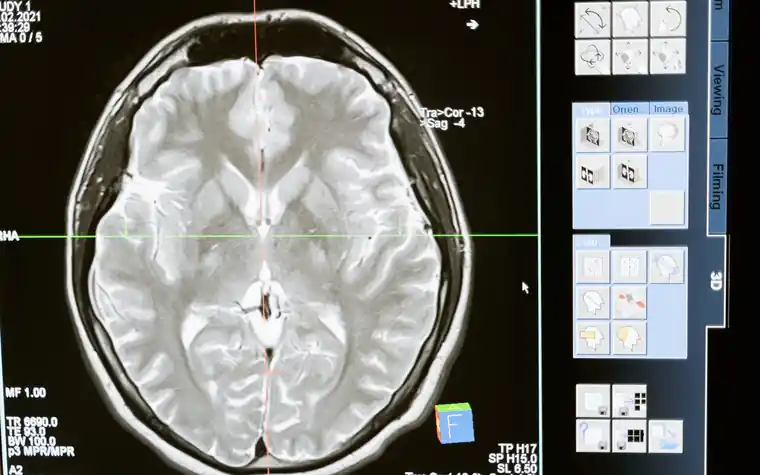
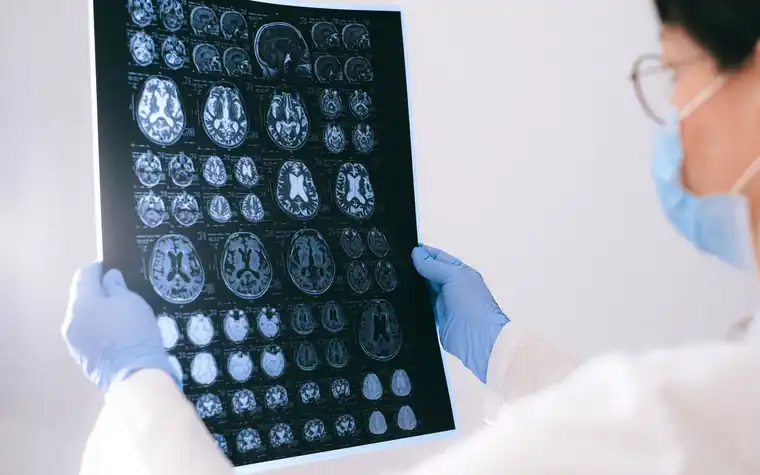
Next is brain imaging. With CT or MRI, other causes such as brain tumor, cerebral hemorrhage, normal pressure hydrocephalus, and vascular changes are distinguished, and the pattern of brain atrophy that appears in Alzheimer's disease is confirmed. Rather than solely confirming Alzheimer's disease on its own, imaging plays the role of ruling out other conditions and completing the whole picture.
Biomarkers and Other Detailed Tests
When the preceding process still makes judgment difficult, or when greater accuracy is needed, biomarker testing is used. Amyloid PET shows whether beta-amyloid protein has accumulated in the brain, and cerebrospinal fluid testing measures levels of beta-amyloid, tau, and phosphorylated tau. Such tests directly reflect the pathology of Alzheimer's disease and help raise diagnostic accuracy. However, they are not necessary for everyone; a specialist decides whether they are needed by considering the symptoms and the results of the preceding tests together. Recently, it has been emphasized that the earlier and more accurately a diagnosis is made, the sooner management and treatment planning can begin.
Where to Start Testing
The most pressure-free starting point is the free screening test at a dementia relief center. Anyone 60 or older can receive a free screening test at a nearby dementia relief center or public health center, with results confirmed immediately. If cognitive decline is suspected here, you receive detailed examinations (neuropsychological assessment and diagnostic tests) under a specialist's care at a partner hospital or clinic, and if dementia is confirmed, this leads to differential tests such as blood work and brain imaging.
If you have questions or need counseling, you can use the Dementia Counseling Call Center 1899-9988 (National Institute of Dementia). For accurate information on testing procedures and support, it is safe to verify at official sources such as the Korean Dementia Association and the Korea Disease Control and Prevention Agency's National Health Information Portal.
Things Worth Knowing Before Testing
Preparing a few things before the test makes the process smoother. First, it is best to have a family member who knows the patient well accompany them. The person themselves often understates the changes, so an explanation from someone who has observed them up close is a great help to diagnosis. Bringing a list of current medications (including prescriptions from other hospitals) and a note organizing when and what symptoms began makes the interview more accurate. Because neuropsychological assessment requires concentration, book a time slot when the patient is in good condition, and bring assistive devices they normally use, such as glasses and hearing aids. Rather than being elated or dejected over each individual test result, remembering that the purpose is to accurately distinguish the cause through the whole process will make your mind much lighter.
Frequently Asked Questions (FAQ)
- Does dementia testing finish in one go? No. If there is no abnormality on the screening test, it ends there, but if decline is suspected, the cause is distinguished through several stages such as neuropsychological assessment, blood tests, and brain imaging.
- I'm worried about the cost of testing. Those 60 or older can receive the screening test at a dementia relief center or public health center free of charge, and there are also state programs that support the cost of subsequent detailed and differential tests. It is accurate to inquire with your local center about the detailed scope of support.
- Can I diagnose it with an online self-test? A self-check list is a reference only for deciding whether to visit a hospital and does not replace a diagnosis. If you have worrying changes, we recommend starting with a screening test.
- What is good about an early diagnosis? You gain the chance to find and treat reversible causes, and even if it is Alzheimer's disease, you can begin management and treatment at an earlier point.
This article is general health information and does not replace medical diagnosis or treatment. For an accurate diagnosis, be sure to see a specialist such as a neurologist or psychiatrist.
All content is fact-checked under our editorial standards.