
If your car has been under water — own-damage cover, why not to start the engine, and acquisition tax after a write-off
Every year, after heavy rain or a typhoon passes, cars parked overnight are found sitting in water. What decides whether the loss is covered is not the scale of the flood but which cover you held, and what state the car was left in before the water arrived. Here it is in order.
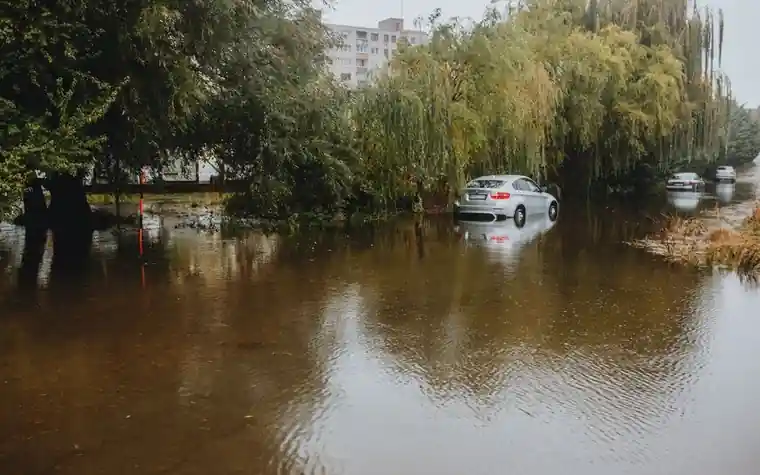
Without own-damage cover there is no payout
Damage to your own car from a natural event such as a typhoon, flood or storm surge is paid under own-damage cover (jacha). Bodily injury and property damage liability cover other people and other people's property, so they have nothing to do with flooding.
If own-damage cover was dropped to save on premiums, a flood is entirely out of pocket. Older cars are the usual case, yet flooding tends to produce repair costs that exceed the value of the car regardless of its age. It is worth checking your policy for own-damage cover and the deductible before the rainy season.
Flood damage from a natural event does not raise your premium
The usual hesitation is whether claiming will push next year's premium up. Flooding that is not the driver's fault is not treated as a premium-raising accident. A car submerged while parked during a typhoon or downpour falls into that category.
What can happen is that the no-claims discount is held back for about a year. Surcharge and discount suspension are two different things, so where repairs are minor it can still be cheaper to pay yourself once the deductible is counted. How premium grades actually move is set out in the surcharge threshold and accident-count rating.
The cases where a claim is refused are defined
Even with the same flooding, cover can be limited or refused in the following situations.
- The interior was soaked because a window or sunroof was left open
- The car was driven into a controlled area or along a road already under water
- The car was parked in a no-parking or controlled area despite flood warnings
What these share is a judgement that the loss was foreseeable. Conversely, a car parked normally in a designated car park and submerged when a river burst its banks is covered. Borderline cases — a window left slightly open while the water rose above the roof — become a matter of negotiation with the insurer, which is why photographs of the scene and of the water line matter.
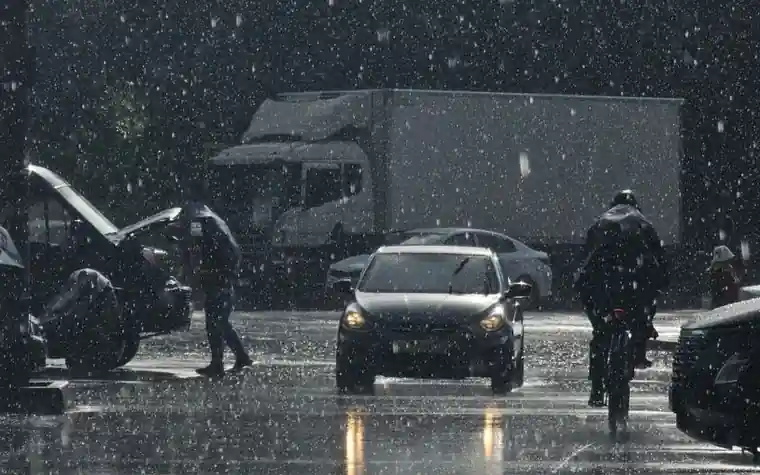
Belongings inside the car are not covered
Own-damage cover pays for damage to the vehicle itself. Personal items such as golf clubs in the boot, a laptop or a child seat are not included in principle. The dividing line is whether the item is equipment fixed to the car or property being carried in it.
Even devices attached to the car, such as a dashcam or navigation unit, are handled differently depending on whether they are factory-fitted or aftermarket. During the rainy season the surest precaution is not leaving anything valuable in the car.
Do not start the engine once the water has gone
This is the single most important line in flood response. Starting the engine after the water recedes draws water into it and spreads the damage. That holds even when the car looks fine from outside.
Electric and hybrid cars need more care because of the high-voltage battery. There is a risk of electric shock, so the rule is to leave it alone and call for a tow.
The order is this: take photographs → notify the insurer → request a tow → deliver the car to a workshop. If the damage is judged to have been enlarged by starting the engine, that part can become a dispute.
If the car is written off, check the acquisition tax
When repair costs exceed the value of the vehicle, the claim is settled as a total loss. What is easily missed at that point is the acquisition tax on the replacement car.
Article 92 of the Restriction of Special Local Taxation Act exempts acquisition tax on a replacement vehicle acquired within two years of a car being destroyed or damaged by a disaster such as a typhoon or torrential rain. The exemption is capped at the value of the vehicle that was lost. If the settlement was 20 million won and the new car costs 30 million won, acquisition tax applies to the 10 million won difference.
You claim it by submitting proof of the disaster and of the total-loss settlement to your local district office when registering the car. Even if you learn of it after registering, there is a refund route worth asking about. If you are clearing vehicle paperwork in one go, it is convenient to also run a check on fines and penalties the same day.
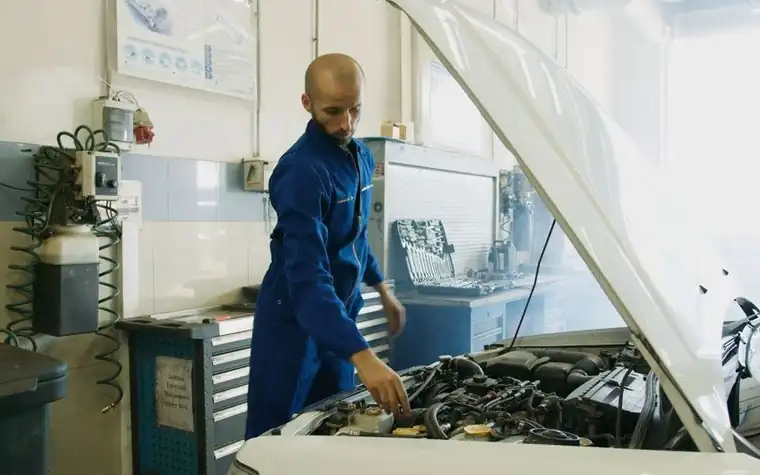
Buying a used car — flood history can be checked free of charge
After heavy rain, repaired flood-damaged cars find their way into the used market. Flood claim records can be looked up on Carhistory, run by the Korea Insurance Development Institute, and the flood search is provided free.
A car flooded without an insurance claim, however, leaves no record. So do not rely on the search alone: pull the seat belt all the way out to look for staining and silt, check the seat rails and the spare-wheel well in the boot for dried mud, and smell for mould.
What can be done before the rain
On days with heavy rain forecast, the priority is avoiding riverside car parks and low-lying underground car parks. Keeping your contact details current so that you receive the vehicle evacuation alerts insurers send to flood-risk areas is another step.
If the structure of your cover is unclear, read the basic structure of insurance terms first, then look at the policy. Confirming just two lines — whether you have own-damage cover, and the deductible — takes care of half the preparation for the rainy season.
All content is fact-checked under our editorial standards.