
Korea's Electricity Welfare Discount Only Applies If You Ask - the 16,000 Won Cap, and 20,000 in Summer
Most households only learn about it after opening the August bill: Korea's electricity welfare discount. Even if you are already registered as a basic livelihood recipient, even if you already hold a disability registration card, not a single won is deducted unless you apply to KEPCO separately. Government offices know your status, but the bill reduction is a separate arrangement with the utility. On top of that, the monthly ceiling rises for three summer months — which makes right now the point at which applying pays off most.

Eligibility does not apply itself
This is the most commonly missed point. The discount applies from the month you apply. It is not backdated. If you have been a recipient for three years and applied for the first time this year, the previous two years are simply gone.
Applying carries no deadline and can be done at any time. The problem is that nobody tells you. It is sometimes mentioned when a benefit decision is issued at the community service centre, but electricity, city gas and telecom discounts sit with different agencies, so they are more often not processed together.
The eligible group is wider than people assume. It covers persons of national merit, independence merit and May 18 democratic merit, persons with disabilities, basic livelihood recipients, the near-poor bracket, households with three or more children, households of five or more members, households with a newborn, households using life-support equipment, and social welfare facilities. The multi-child, large-household and newborn categories have no income test at all. A fair number of homes already qualify on that basis alone.
The ceiling by category — fixed amounts and percentages are mixed
There are two discount mechanisms: a fixed monthly cap, and a percentage of the bill subject to a cap.
| Category | Discount | Summer (Jul-Sep) |
|---|---|---|
| Wounded veterans, persons with severe disabilities, livelihood and medical benefit recipients | Up to 16,000 won a month | Up to 20,000 won |
| Housing and education benefit recipients | Up to 10,000 won a month | Up to 12,000 won |
| Near-poor bracket | Up to 8,000 won a month | Up to 10,000 won |
| Three or more children, five or more household members, newborn households | 30% off, capped at 16,000 won a month | Same |
| Social welfare facilities, life-support equipment households | 30% off | Same |
The table shows the direction clearly. Fixed-cap categories stop at the cap no matter how large the bill grows. Percentage categories gain more as the bill rises, but multi-child, large and newborn households are cut off at 16,000 won. So a five-person household with a 300,000 won summer bill does not receive 30 percent, or 90,000 won — it receives 16,000 won. It is better to set expectations in advance.
The ceiling rises for three summer months
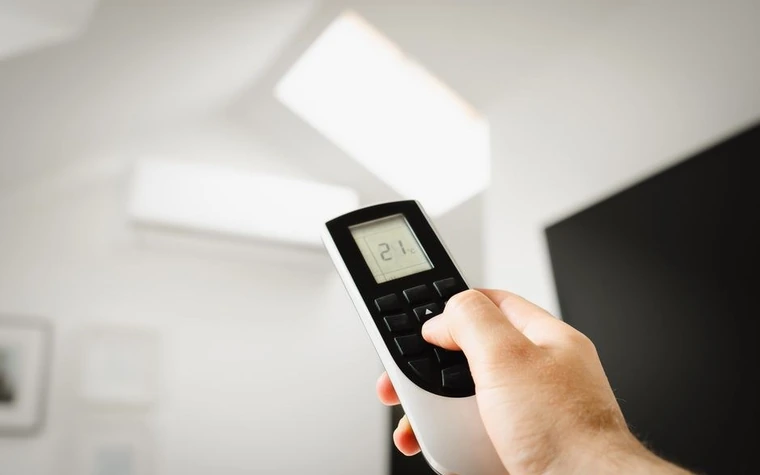
To reflect the jump in cooling use, the monthly cap for vulnerable groups is raised in July, August and September. Livelihood and medical benefit recipients, along with persons with disabilities and wounded veterans, move from 16,000 to 20,000 won; housing and education benefit recipients from 10,000 to 12,000 won; the near-poor bracket from 8,000 to 10,000 won.
One practical point matters here. The bill reflecting summer usage arrives the month after the electricity was used. Apply now, in mid-August, and the raised cap applies to August usage. Wait until the September bill shocks you and it starts with September usage. One month of delay is a real difference in money during exactly this window.
Why the seasonal uplift exists becomes obvious from the rate structure. Residential electricity is priced so that the unit rate climbs as usage rises, so a little extra cooling pushes the bill up in steps. If the structure itself is what you want to understand, start with why summer electricity bills spike.
No stacking — pick the single best one
Plenty of households qualify under two or more headings: three children and five members, or a disability household that is also a benefit recipient. In that case discounts are not applied cumulatively. You must choose one.
The selection rule is simple: whichever actually deducts more at your household's bill level.
- If your monthly bill is around 50,000 won or below, 30 percent comes to under 15,000 won, so a fixed 16,000 won entitlement is often the better choice.
- Once the bill passes roughly 60,000 won, the 30 percent calculation hits the 16,000 won cap first and the two methods converge.
- If housing or education benefit status (10,000 won) overlaps with multi-child status (30% capped at 16,000 won), the multi-child route is larger from about 34,000 won upward.
If the arithmetic is tiresome, quote your recent bill amount when you apply and ask which option is better. The counter will compare them for you.
Apartments use a different channel
This is where applications commonly stall. Households contracted directly with KEPCO apply to KEPCO. But apartments where electricity is billed inside the maintenance fee — buildings contracted with KEPCO as a single account for the whole complex — cannot be processed by calling KEPCO. They must go through the management office.
Checking which one you are is straightforward: does a KEPCO bill arrive separately in your name? If the electricity line item appears on your maintenance fee statement and no KEPCO bill arrives, it is the management office's remit.
Name mismatches also trip people up. In principle the eligible person must be resident-registered at that address, and if the electricity account holder differs from the eligible person, additional confirming documents may be requested. If your move-in registration is outstanding, settle that first. If you also have items to settle from a move, check the money you get back when you move out at the same time.
Where to apply and what to bring
There are several channels. One is enough.
- KEPCO ON (online) — identity verification, then apply
- KEPCO customer centre, 123 — by phone
- Community service centre — handled alongside benefit or near-poor status verification, in which case separate documents are often unnecessary
- Government24 subsidy service — useful for seeing every reduction you qualify for at once
- Management office — for apartments where electricity is inside the maintenance fee
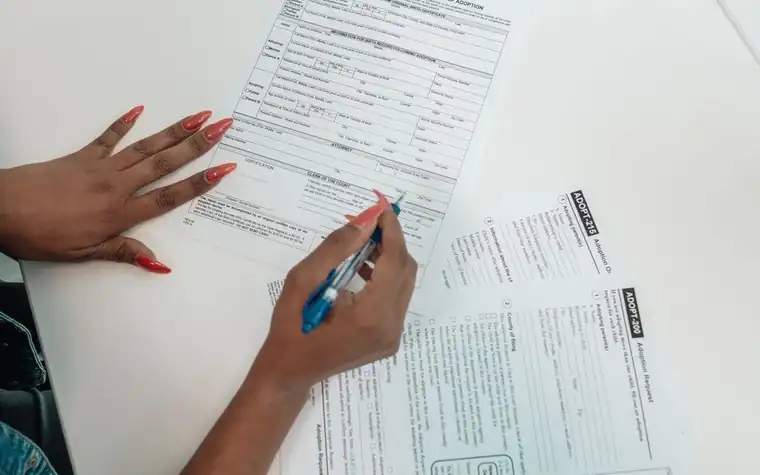
Required documents vary by category. Statuses that the administration can verify itself (benefit recipients, near-poor, multi-child, large households) generally need no additional evidence, while cases requiring medical confirmation, such as life-support equipment, call for a prescription or a physician's certificate. Newborn households carry a time condition of under three years from the date of birth, so check the remaining window against your child's birthday.
If it is still unmanageable — instalments and vouchers
Sometimes even with the discount the summer bill is heavy. Two further routes exist.
First, instalment payment. KEPCO has run instalment schemes for residential and other customers during peak cooling and heating periods. The structure is to pay part of the current bill first and spread the remainder over several months, with the eligible group, the minimum bill threshold, the number of instalments and the application deadline set by notice each year. Because the terms change annually, check this year's notice on KEPCO ON or via 123 before applying. Apartment residents again go through the management office.
Second, the energy voucher. That programme sits with the energy ministry and local governments rather than KEPCO, and its application period and eligibility rules are set separately from the welfare discount. The summer portion has a fixed usage window, so late applicants lose it. The two can be used together, so recipients should check both. This pattern of money scattered across schemes you must claim yourself is the same one behind finding unclaimed money and health insurance refunds.
What to check now, in order
- See whether your household falls into a category. Multi-child, large and newborn households have no income test.
- Confirm whether a KEPCO bill arrives in your name, which decides your channel (KEPCO or management office).
- If you qualify under two or more headings, pick the better one using your recent bill amount.
- Apply within August. It applies from the month of application and is not backdated.
- If the burden is large, check instalment payment and the energy voucher separately.
This article draws on the Government24 guide to the residential electricity welfare discount (eligibility, benefits, how to apply), the Ministry of Health and Welfare's summary of reductions for basic livelihood security recipients, and KEPCO's welfare discount information (verified August 2026). Discount caps, eligibility conditions and instalment terms change with notices and tariff revisions. Before applying, confirm the current standard with the KEPCO customer centre (123) or KEPCO ON, or with your management office if you live in an apartment.
All content is fact-checked under our editorial standards.