
Car insurance does not start loading only above two million won in repairs — the threshold and the claim-count rate
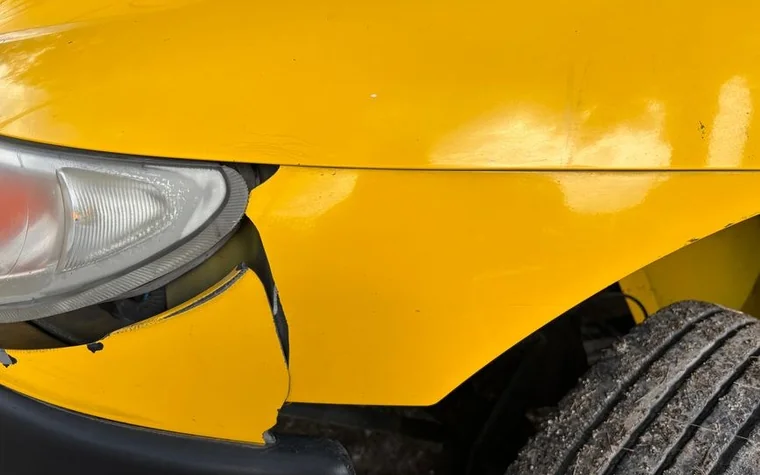
You scraped someone's car in a car park and the repair estimate comes to 1.3 million won. The line you hear most at this point is "under two million there's no loading, so just claim on the insurance." That is only half right. Your grade does not fall, but the premium does rise. Once you understand how the premium is set, deciding between claiming and paying yourself becomes much faster.
Two separate axes move the premium
A motor premium is not set by a single number. Two axes turn independently: the discount and loading grade and the claim-count rate. Most explanations cover only the first, which is where the confusion starts.
The grade looks at the size of a claim. A year without a claim moves you up one grade; a claim moves you down by the points scored. The claim-count rate looks at the number of claims. Even a small amount, once counted as a claim, pushes the premium up on this side.
So "there's no loading" usually refers to the grade. Grades holding steady while the renewal premium rises because of the second axis is common.
The property damage threshold is a figure you chose
The two million won people talk about is not fixed by law; it is the value you selected when taking out the policy. Insurers typically offer 500,000, 1 million, 1.5 million or 2 million won. Open your policy schedule and it appears under the property damage loading threshold.
The comparison is not against the repair estimate but against the insurance the insurer actually paid, combining third-party property damage and own damage cover. Any excess you paid yourself is not included.
Points are scored as follows. On property cover, exceeding the threshold scores one point per claim, and staying below it scores half a point. Injury claims weigh more: a fatality scores four points per claim, injury scores one to four depending on severity, and personal injury to the driver scores one point per claim. And each point drops you one grade.
What a half-point claim leaves behind — the premium still rises
A claim at or below the threshold scores half a point, so the grade does not fall immediately. It is, however, still recorded as a claim. The claim-count rate applies its own loading based on claims over the last one and three years, so the renewal premium rises even with the grade intact.
The other easily missed effect is that the no-claims discount stops. The grade increase you would have received for a claim-free year disappears. What you actually feel at renewal is the loading plus the discount you did not get.
Where a claim does drop the grade, the effect runs for three years, after which a claim-free record restores one grade a year. Treating a single small claim as an addition to three years of premium makes the decision easier.

How to compare claiming against paying yourself
The test is simple: compare what the repair costs out of pocket with the extra premium over three years if you claim. In the example above, 1.3 million won of repairs against a two million threshold is a half-point claim, yet with the claim-count rate and the forgone discount added, the extra burden across three years often reaches several hundred thousand won.
When using own damage cover, factor in the excess as well. It is typically set as 20 per cent of the loss with a minimum of 200,000 and a maximum of 500,000 won. On 1.3 million won of repairs, 260,000 is yours regardless, and the insurer pays that much less.
When the call is not obvious, asking the insurer for the projected renewal premium is the quickest route. If the claim has been filed but not yet paid, you can also confirm the amount due and whether it can be switched to a self-funded repair.
Five things to open before renewal
Most of the meaningful adjustments happen at renewal. Check these items on the schedule in order.
- Named driver scope — narrowing it to yourself or to a couple lowers the premium. But an accident while someone outside the scope is driving is not covered, so it must match how the car is actually used.
- Annual mileage endorsement — low mileage earns a refund after renewal or a discount up front, usually by submitting a photograph of the odometer.
- Dashcam and safety feature discounts — frequently missed because the equipment is fitted but never declared.
- Third-party property limit — raising the limit costs less than expected, and one collision with an expensive vehicle makes the difference large.
- Property damage loading threshold — setting it high avoids grade drops on small claims but raises the premium itself. Setting it low cuts the premium but turns small claims into full points.
When the insurance terms get confusing
Motor cover renews annually, so the terms are chosen again each year. If basic vocabulary — renewable versus non-renewable, protection versus savings type — gets in the way, comparison becomes impossible. To start from the concepts, understanding insurance terms from scratch is a suitable starting point.
To see how money actually moves after a claim, the structure in the indemnity medical insurance claim flow is a useful reference. The cover differs, but claim, payment and excess work the same way. Costs that attach separately from an accident, such as fines and penalties, are handled in the life board.
In summary
Two million won is not a statutory figure but the property damage loading threshold you chose, and it is compared against the insurance actually paid, not the estimate. Stay below it and the half point leaves your grade intact, but the premium still rises because of the claim-count rate and the interrupted no-claims discount.
So the question is not "will it be loaded?" but "is the extra premium over three years greater than the repair bill?" Add in the fact that the excess reduces what the insurer actually pays, and it becomes clear why paying for small damage yourself so often works out better.
All content is fact-checked under our editorial standards.