
Can Alzheimer's Be Cured? The Truth About 'Cure Stories' and Reversible Dementia
To state the conclusion first: modern medicine has no established way to 'cure' Alzheimer's disease itself. Even so, searches for 'Alzheimer's cure stories' never stop. Many of the recovery testimonials circulating online were, in fact, most likely not Alzheimer's at all, but dementia caused by 'a different, reversible condition.' Rather than offering false hope or vague fear, this article honestly lays out what is currently known and what you should actually do. The core is simple: get an accurate diagnosis to distinguish treatable causes, and do not be misled by baseless cure advertisements.

Can Alzheimer's Be Cured — The Current Facts
Alzheimer's disease is a progressive degenerative disorder in which nerve cells are gradually damaged as abnormal proteins such as amyloid and tau accumulate in the brain. To this day there is no 'cure' that reverses this damage and eradicates the disease at its root. Treatments approved by the Ministry of Food and Drug Safety and by regulatory agencies in other countries generally fall into two categories. One is medication that manages or slows symptoms to some degree; the other is treatment aimed at slowing the rate of progression in early-stage patients. Neither means a 'cure.'
Therefore, claims that 'Alzheimer's has been cured' or that 'just taking this will make it go away,' along with advertisements for particular health foods, miracle therapies, or folk remedies, are not only scientifically baseless but also dangerous. If you trust such advertisements and miss the window for proven diagnosis and treatment, you may even lose an opportunity that could have been reversible.
What 'Cure Stories' Really Are — Reversible Dementia
Here a balanced truth emerges. Not all 'dementia symptoms' are due to Alzheimer's disease. Some cases of memory decline or cognitive change are reversible dementia (dementia that can be turned back), which can improve once the underlying cause is treated. In fact, it is known that some patients who visit hospitals for dementia symptoms have a treatable cause. When such cases recover, they are often misreported as 'Alzheimer's cure stories.' Representative reversible causes include the following.
- Hypothyroidism — Abnormal thyroid hormone levels can affect mood and thinking ability, and the condition can improve with hormone regulation.
- Vitamin B12 deficiency — A lack of B12, which is essential for nerve health, can cause cognitive decline, and it may improve with supplementation.
- Normal pressure hydrocephalus — A condition in which cerebrospinal fluid accumulates and presses on the brain, characterized by gait disturbance, urinary incontinence, and cognitive decline; it can improve with treatments such as shunt surgery.
- Pseudodementia due to depression — Depression can manifest as reduced concentration and memory, and it can recover with treatment of the depression.
- Medication side effects, chronic subdural hematoma, and others — Some cases can improve by adjusting the responsible medication or with treatment.
The reason this list matters is clear: even when the outward symptoms look similar, the outcome is entirely different depending on the cause. That is why an accurate diagnosis is the starting point of everything.
Where New Drugs and Treatments Stand — Not a Cure
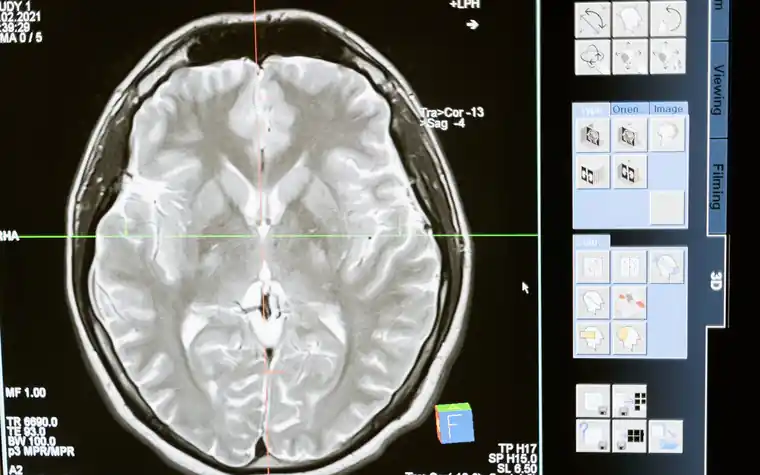
Recently, anti-amyloid antibody drugs targeting early-stage Alzheimer's patients have drawn attention after being approved. These drugs have been reported to remove amyloid accumulated in the brain and to slow the rate of clinical worsening to some extent. However, there are limitations that must be pointed out.
- The purpose is not a 'cure' but to slow progression in early-stage patients; the drugs do not stop or reverse the disease.
- Their use is limited to early-stage patients in whom amyloid has been confirmed, and suitability must be verified through testing.
- Risks of side effects such as brain swelling and microbleeds, along with cost and accessibility issues, must also be considered.
In other words, the new drugs are meaningful progress but are not a 'cure.' Whether to take them and any prescription must follow the judgment of a specialist, and you should be wary of information that exaggerates particular products.
How to Avoid Baseless Cure Advertisements
Be suspicious when you see signs like these: expressions that assert 'cure, miracle effect, 100% recovery'; testimonials and star ratings of unclear origin; claims that something replaces a hospital diagnosis; and pressure to buy expensive products. The safest approach is to verify accurate information from official sources. Make use of the National Institute of Dementia (1899-9988), the Korean Dementia Association, the Korea Disease Control and Prevention Agency's National Health Information Portal, and the Ministry of Food and Drug Safety, which provides warnings about false and exaggerated advertising. Above all, if you are worried about changes in memory, the first step is to visit a neurology or psychiatry clinic to distinguish the cause, rather than searching for advertisements.
What Families Can Do Right Now
Beneath the urge to search for cure information lies a desperate feeling of 'wanting to do something, anything.' It is important to redirect that energy in a proven direction. First, if an accurate diagnosis has not yet been made, start by distinguishing the cause at a neurology or psychiatry department. If there is a reversible cause, addressing it is itself the surest 'path to improvement.' Second, when gathering information, use official sources such as the National Institute of Dementia, the Korean Dementia Association, and the Korea Disease Control and Prevention Agency's National Health Information Portal as your standard, rather than advertisements that assert a cure. Third, if you are interested in a new treatment or clinical trial, it is safer to consult your medical team to check its safety and suitability rather than deciding on your own. Fourth, after an early diagnosis, starting management that slows progression early on (controlling comorbidities, providing activity and cognitive stimulation, and care planning) offers practical help. Rather than chasing a cure, tending to what you can do reliably today is ultimately beneficial for both patient and family.
Frequently Asked Questions (FAQ)
Q1. Are there really cases where Alzheimer's has been cured?
There is currently no established case of Alzheimer's disease itself being cured. Many stories known as 'cures' were likely reversible dementia that improved with treatment of the cause, such as hypothyroidism, vitamin B12 deficiency, or normal pressure hydrocephalus.
Q2. So does worsening memory always mean Alzheimer's?
No. It could be a treatable cause, so self-diagnosis is off-limits. An accurate diagnosis that distinguishes the cause through blood tests, imaging, and cognitive testing comes first.
Q3. I heard a new drug came out — can it cure the disease now?
Anti-amyloid drugs are aimed at slowing progression in certain early-stage patients and are not a cure. Because of eligibility limits, side effects, and cost, consultation with a specialist is essential.
Q4. Can I trust health-food ads that guarantee a cure?
Do not trust them. Products or therapies that assert a cure or miracle effect are baseless and dangerous, and can cause you to miss the window for treatment. If you are curious, check information from the Ministry of Food and Drug Safety and official institutions.
This article is general health information and does not replace medical diagnosis or treatment. If memory decline or cognitive change is suspected, be sure to consult a specialist such as a neurologist or psychiatrist.
All content is fact-checked under our editorial standards.