
Dementia Symptoms by Stage — A Complete Guide to Early, Middle, and Late Stages and Care
Dementia is not a disease that suddenly worsens one day; it is a brain disorder with a course that progresses slowly over many years. So if the family can picture in advance “what stage things are at now and what will change going forward,” they can be far less flustered and better prepared. Centering on Alzheimer's-type dementia, the most common form, this article organizes the course into three stages — early, middle, and late — with representative symptoms and care directions. However, please remember first that the pace of progression and the symptoms differ greatly from person to person, and that this division is only a general framework to aid understanding, not a fixed timetable.
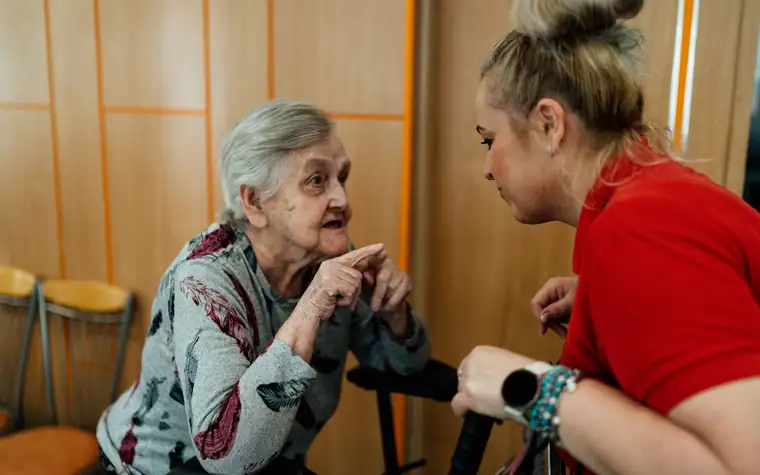
Dementia Is Easier to Understand When Divided Into Stages
The reason for dividing the course of dementia into stages is not to stigmatize but because the care and safety measures needed differ by period. In clinical practice, assessment tools such as the GDS (Global Deterioration Scale) and CDR (Clinical Dementia Rating) are used to gauge the stage by comprehensively considering memory, orientation, judgment, ability to perform daily activities, and more. Such scales are for professionals to judge by looking at multiple pieces of information together, not for a family to grade themselves as “such-and-such a stage” based on just a few symptoms. Please treat the explanations below only as a rough flow for reference, and leave accurate assessment to a specialist and the dementia relief center.
What matters is that even with the same diagnosis, one person may change gently over many years while another changes relatively quickly. Also, because the boundaries between early, middle, and late stages are not sharply defined as if cut by a knife, symptoms may overlap. So there is no need to feel anxious that “our family is different from the textbook.”
Symptoms and Care in the Early Stage
In the early stage, the representative sign is frequently forgetting recent events. Old, long-past memories are relatively clear, but recent memories weaken — an appointment just made, a conversation just had, where an object was put. Judgment and calculation ability decline, so handling once-familiar tasks is no longer as before, and the person may confuse the date or day of the week. It is also common for emotional and personality changes — reduced motivation, a low mood, or becoming irritable — to come along.
In this period, the person can generally do a large part of daily life on their own, so those around them easily dismiss it as “that happens when you get older.” But the early stage is precisely when intervention is most meaningful. It is known that getting an early diagnosis and beginning treatment and management generally helps slow progression and maintain remaining function for longer. Families can structure the day using calendars, notes, and reminders, support the person in doing as much as they can on their own, and check safety issues such as driving and money management in advance.

Symptoms and Care in the Middle Stage
Entering the middle stage, the areas needing help increase noticeably. Orientation — recognizing time, place, and people — declines, so the person gets confused about what day it is or where they are, and may fail to recognize people close to them. Words do not come to mind, making it hard to explain things verbally, and they may forget how to use familiar objects.
What most burdens families at this stage is commonly the 'behavioral and psychological symptoms.' Wandering — going outside and getting lost — suspicion and delusions that someone took their belongings, anxiety and agitation, sleep problems with day and night reversed, and sometimes aggressive reactions can appear. The starting point of care is understanding that these behaviors are not done on purpose but are symptoms of the disease. Help also becomes necessary with daily activities such as washing, dressing, and using the toilet.
The direction of care is a 'safe environment' and a 'predictable routine.' Equipping door locks and ID tags to prepare for going missing, preventing slips and falls, and keeping the flow of the day simple and consistent reduce confusion and anxiety. Rather than reprimanding the symptoms, conversation that first reassures the person's emotions helps. From around this time, it is the point to actively consider applying for a Long-Term Care Insurance for the Elderly grade and connecting care services such as day care and home visit care.
Symptoms and Care in the Late Stage
In the late stage, cognitive function declines greatly overall, so the person comes to depend on others for most of daily life. Speech decreases greatly, making communication difficult, and difficulties can arise with mobility such as walking and sitting, as well as with the ability to swallow food. As movement decreases, the person becomes vulnerable to infections such as pressure sores and pneumonia, so managing physical health becomes even more important.
Care in this period focuses on preserving comfort and dignity rather than 'restoring something.' Carefully watching for pain and discomfort, tending to skin, oral, and nutritional status, and continuing emotional connection through nonverbal means — holding a hand, a familiar voice, or music — carry great meaning. Do not hesitate to receive help from palliative care and specialized nursing staff, and it is best for the family and medical team to discuss future care and life-sustaining decisions together in advance.
What Families Should Prepare at Each Stage
The principle running through all three stages is 'preparing one step ahead.' In the early stage, hurry the diagnosis and treatment, sort out safety matters such as money and driving, and have the family plan for the future together. In the middle stage, arrange a safe environment and a regular routine, and connect long-term care services. In the late stage, focus on palliative care and dignity.
- Do not carry it alone — actively use the counseling, education, and care resources of the dementia relief center and the National Institute of Dementia (1899-9988).
- To prevent burnout of the main caregiver, divide roles among family members and use respite services.
- Recording symptom changes and medication status and sharing them at appointments helps with assessment.

Frequently Asked Questions (FAQ)
Q. How do ordinary forgetfulness and early dementia symptoms differ? Forgetfulness that comes with age usually revives the memory when given a hint, but in dementia the person forgets the very fact that something happened and tends to repeat it to the point of disrupting daily life. If you are worried, we recommend getting a specialist consultation and examination.
Q. How many years does each stage last? There is no fixed duration. The pace of progression differs greatly from person to person, so it is hard to assert a number of years. Rather than struggling to predict the duration, it is realistic to focus on the care needed now.
Q. Will treatment cure dementia? At present it is hard to say there is a method that can assert a cure. However, diagnosing and managing it early is generally known to help slow progression and maintain quality of life, so early intervention carries great meaning.
Q. Where can I get help? You can receive guidance on diagnosis, counseling, and care services through a nearby dementia relief center, the National Institute of Dementia (1899-9988), materials from the Korean Dementia Association, and the Long-Term Care Insurance for the Elderly system.
This article is general health information and does not replace medical diagnosis or treatment. For assessment and management of the patient's condition, be sure to consult a specialist and a dementia relief center.
All content is fact-checked under our editorial standards.