
Early Symptoms of Hyperlipidemia — Mostly Symptomless, Detectable Only by Testing
The biggest characteristic of hyperlipidemia (dyslipidemia) is that "there is no feeling at all." Even when cholesterol and triglycerides build up on the artery walls beyond a dangerous level, there is no pain or clear signal, so it is called a "silent disease." By the time you wait for symptoms, it may already be too late, and practically the only means of detection is a lipid test that draws blood to check. This article lays out why there are almost no symptoms, what the rare "already-advanced signs" are, and when you should get tested.

Why Does Hyperlipidemia Have Almost No Symptoms?
Hyperlipidemia refers to a state in which blood LDL cholesterol or triglycerides are higher than normal, or HDL cholesterol is low. The problem is that the very process of these numbers rising causes no pain in the body. Even as lipids slowly deposit inside the blood vessels and atherosclerosis progresses, the nerves are not stimulated until blood flow is largely blocked, so most people feel nothing.
This very "absence of symptoms" is the core of what makes hyperlipidemia dangerous. When you have a headache you reach for a painkiller and when you have a fever you go to the hospital, but cholesterol sends no signal while it rises, so it is easy to miss the point at which to manage it. In fact, in many cases it is discovered by chance during a health checkup or when visiting the hospital for another illness. The thought "I have no symptoms, so I'm fine" is the most common and most dangerous misconception, because having no symptoms and having no problem are entirely different matters.
"Advanced Signs" That Appear Instead of Symptoms
There are, rarely, signs that show on the outside. However, these are less "early symptoms" and closer to traces that appear when the condition has already progressed considerably or when cholesterol is greatly elevated for genetic reasons (familial hypercholesterolemia). Representative examples are as follows.
- Xanthoma (xanthelasma): When yellowish, raised fatty deposits form around the eyelids or on the elbows, knees, or Achilles tendon.
- Corneal arcus (arcus senilis): When a grayish-white ring is observed around the edge of the cornea (the dark part of the eye).
- Achilles tendon thickening: When the heel tendon feels unusually thick and hard.
If you see these signs, they suggest lipid levels may have been high for a long time or to a great degree, so a medical consultation is essential. Going further, when atherosclerosis progresses in the heart or brain vessels, it leads to complications. These include crushing chest pain or tightness, chest pain during exercise (a sign of angina), and stroke warning signs such as weakness in one arm or leg, speech difficulty, and facial paralysis. These should be seen not as symptoms of hyperlipidemia itself but as "the result of neglect," and symptoms suggesting a stroke in particular are a situation requiring an immediate visit to the emergency room.
In the End, Only Testing Can Tell — Screening Intervals
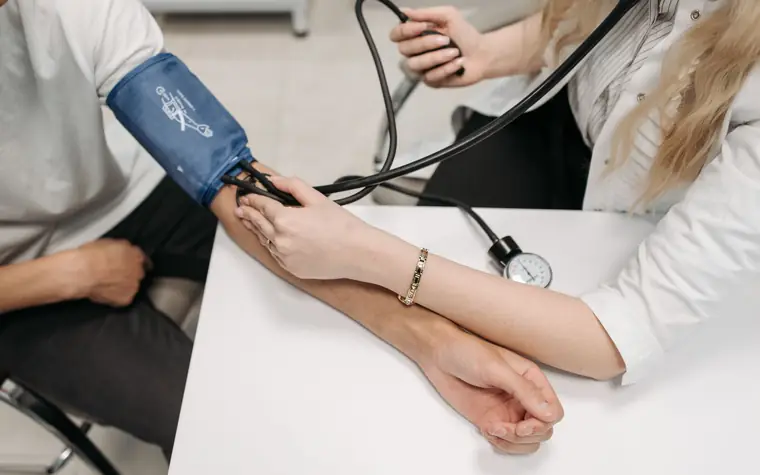
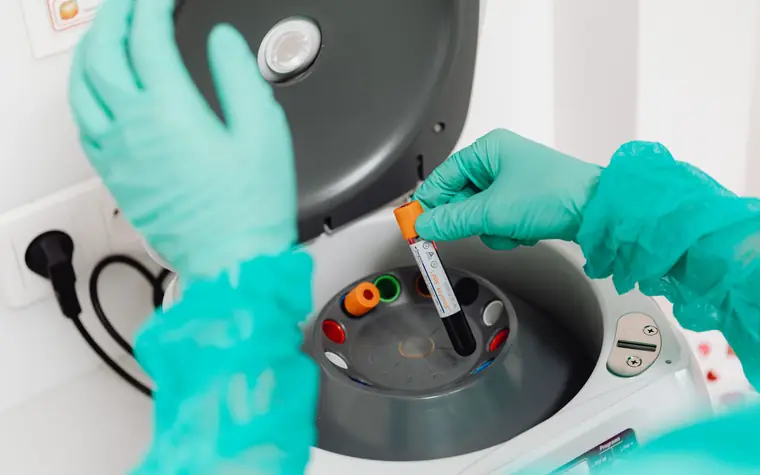
In short, there is only one realistic way to detect hyperlipidemia early: a blood test (lipid test). This test, which measures total cholesterol, LDL, HDL, and triglycerides, is usually done simply by drawing blood in a fasting state. It is important to clearly understand that it cannot be detected by observing symptoms.
General adults are recommended to get regular lipid tests even without any symptoms. Korea's national health screening also includes a cholesterol test, so it is good to make use of it. However, since testing intervals vary with each person's risk level, those with the following risk factors may need to check more often.
- Having a family history of dyslipidemia or early cardiovascular disease among parents or siblings
- Having obesity, abdominal obesity, or metabolic syndrome
- Suffering from diabetes or high blood pressure
- Being a smoker, or frequently drinking alcohol and living a sedentary lifestyle
Because specific test intervals and target numbers vary greatly with age, underlying conditions, and overall risk, rather than judging on your own, it is advisable to decide in consultation with a doctor or medical professional based on your health checkup results. Do not arbitrarily conclude "once every few years"; please determine an interval suited to your own condition together with a specialist.
See a Doctor in These Cases
If any of the following apply, we recommend a consultation and testing regardless of whether you have symptoms.
- Adults who have not had a cholesterol test in the past few years
- Those who have one or more risk factors such as family history, diabetes, high blood pressure, or obesity
- Those in whom signs described earlier, such as xanthoma around the eyelids or corneal arcus, are observed
- Those with cardiovascular-related symptoms such as chest pain or chest pain during exercise (for emergency signs, go to the emergency room immediately)
National Health Screening and Self-Checking Your Risk
Precisely because it cannot be known by symptoms, not missing regular screening is the best preparation. Korea's national health screening periodically includes a lipid test covering cholesterol, so when you receive a notice that you are eligible, it is best not to postpone it. When you get your screening results, check the total cholesterol, LDL, HDL, and triglyceride items and compare them with previous results to look at the trend. If several of the risk factors below overlap, more active management is needed. Checking for yourself whether anyone in your family experienced cardiovascular disease at an early age, whether you have obesity, abdominal obesity, diabetes, or high blood pressure, and whether smoking, heavy drinking, or lack of exercise apply to you is the starting point. However, please be sure to decide on the interpretation of results and the direction of management in consultation with your medical team.
Frequently Asked Questions (FAQ)
Q1. Should I get tested even though I feel perfectly fine?
Yes. Hyperlipidemia is mostly symptomless, so you cannot know just by a "feeling of being fine." On the contrary, confirming it through regular screening when you have no symptoms is the most important thing.
Q2. Does high cholesterol cause fatigue or headaches?
There is no clear evidence that dyslipidemia itself causes fatigue or headaches. Such symptoms may have other causes, so cholesterol should be judged by testing, not by symptoms.
Q3. If I'm thin, do I not need to worry about hyperlipidemia?
No. Even people with normal weight or a lean build can have high numbers due to genetic factors, diet, or diabetes. You cannot be reassured by body shape alone, so testing is necessary.
Q4. I got a yellow spot around my eye—is it hyperlipidemia?
It may be a xanthoma, which is a sign that can appear when lipid levels have been high. Rather than judging on your own, we recommend seeing a dermatologist or internist and getting a lipid test.
This article is general health information and is not a substitute for medical diagnosis or treatment. If you suspect abnormal cholesterol levels or symptoms, be sure to consult a doctor or medical professional. For more accurate information, please refer to official sources such as the Korea Disease Control and Prevention Agency's National Health Information Portal and the Korean Society of Lipid and Atherosclerosis.
All content is fact-checked under our editorial standards.