
10 Bad Foods for Hyperlipidemia — Foods That Raise Cholesterol and Triglycerides, and Their Alternatives
Half of managing hyperlipidemia (dyslipidemia) is decided at the table. The foods that raise cholesterol and triglycerides are mostly concentrated in saturated fat, trans fat, refined carbohydrates, and fructose. This article picks out 10 foods unfavorable for hyperlipidemia and lays out why each is bad for blood lipids, along with alternative foods to swap them for. This is not about cutting out particular foods unconditionally, but about understanding which components become a problem when eaten often and in large amounts, and adjusting frequency and quantity.
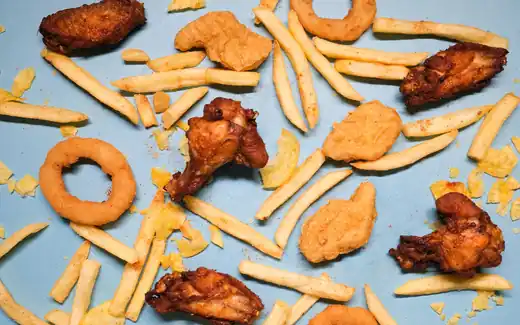
10 bad foods for hyperlipidemia
The following 10 are representative foods high in saturated fat, trans fat, and refined sugars that easily raise LDL cholesterol or triglycerides. It helps to understand them not as a ranking but as a classification by type.
- Processed meat (sausage, ham, bacon) — High in saturated fat and sodium, and with additives from processing on top, it is doubly unfavorable for vascular health. As alternatives, chicken breast, boiled eggs, and tofu are recommended.
- Pork belly and fatty red meat — Saturated fat is concentrated in the visible fat and marbling. Choose lean cuts such as tenderloin or eye of round, and boil or blanch them rather than grilling.
- Fried foods (pork cutlet, french fries) — They soak up oil, so calories and saturated and trans fats surge. Switching to air-fryer cooking or oven-baking greatly reduces oil absorption.
- Butter, heavy cream, and high-fat dairy — These are lumps of animal saturated fat. They can be replaced with olive oil, low-fat milk, and plain yogurt.
- Instant ramyeon and cup noodles — Saturated fat is added in the oil-frying process for the noodles, and sodium from the soup base. Ease it with non-fried noodles or cooking with less broth.
- Pastries and cookies — Products made with shortening or margarine carry a trans-fat risk and can be the worst combination, raising LDL and lowering HDL. Nuts or whole-grain crackers are alternatives.
- Fried chicken skin and seasoned (yangnyeom) chicken — The saturated fat of the skin is compounded by the batter and sugary sauce. Skinless roasted chicken or baeksuk (plain boiled chicken) is better.
- Sweetened and carbonated drinks — High-fructose corn syrup drives triglyceride synthesis in the liver. Switching to water, unsweetened tea, or sparkling water is the surest change.
- Refined carbohydrates such as white bread and white rice — They raise blood sugar quickly and easily elevate triglycerides. Switching to whole-wheat bread, brown rice, and multigrain also gets you dietary fiber.
- Ice cream — High in both saturated fat and sugar at once. You can enjoy it instead by topping unsweetened yogurt with fresh fruit.
Organ meats (liver, tripe) are often singled out for their high cholesterol content, but keep in mind together that their actual effect on blood levels is smaller than that of saturated fat, as explained below.

Saturated and trans fats are the problem, more than cholesterol
There is one long-standing misconception worth correcting. Many people are most wary of "foods containing cholesterol," but the bigger factor that actually raises blood cholesterol is saturated and trans fats. Much of the cholesterol eaten in food is regulated at the absorption stage, whereas saturated and trans fats directly affect the liver's handling of LDL.
A representative example is eggs. Because the yolk contains cholesterol, eggs were long avoided, but recently there is a growing view that, on a diet low in saturated fat, eating one or two eggs a day does not greatly raise LDL in the majority of healthy adults. In other words, rather than fearing a single egg, it is far more important to change the way you fry that egg in butter and pair it with bacon. That said, if you already have dyslipidemia or diabetes, there is individual variation, so it is best to consult a medical professional about the appropriate amount.
How to avoid it when eating out and snacking
Even if you control home cooking, many people fall apart at eating out and snacking. Here are a few realistic tips.
- Choose grilled, steamed, or boiled menu items before fried or stir-fried ones.
- For cuts of meat, pick lean meat instead of pork belly or neck, and trim away visible fat and skin.
- Just swapping the soda that comes with a set for water or unsweetened tea greatly reduces sugar.
- For snacks, switch from cookies and pastries to a handful of nuts, fresh fruit, or plain yogurt.
- Adding fiber-rich vegetables, whole grains, and legumes at every meal helps with lipid management.
Rather than cutting things out perfectly, reducing frequency and substituting lasts longer. As small swaps accumulate, the total saturated fat and sugar of your overall diet drops noticeably.

What to check on processed-food labels
When choosing packaged foods, just reading the nutrition facts table on the back can filter out a good deal of bad fat. There are three items to check. First, choose products with a low saturated fat content. Second, choose trans fat as close to 0 g as possible, but if the ingredient list contains "partially hydrogenated oil, shortening, or margarine," a small amount may be present even if it is labeled 0 g, so be cautious. Third, avoid products high in sugars, as they are unfavorable for triglyceride management. Do not be misled by the phrase "cholesterol-free." Even without cholesterol, a product high in saturated fat or sugar can be unfavorable for your lipids. The habit of checking the label for just a few seconds greatly changes your daily intake.
Frequently asked questions (FAQ)
Q1. How many eggs a day are okay?
Generally, one or two a day is not considered a problem for healthy adults. However, those who already have dyslipidemia or diabetes have individual variation, so it is best to consult your treating medical professional about the appropriate amount.
Q2. If my cholesterol is high, do I have to give up meat entirely?
The key is changing the cut and cooking method rather than giving it up. Choosing mainly lean meat and picking boiling or steaming instead of grilling or frying can reduce saturated fat intake.
Q3. My triglycerides are high—do I only need to watch fat?
No. Triglycerides are greatly affected by refined carbohydrates, the fructose in sweetened drinks, and heavy drinking. You need to manage not only fat but also sugars and alcohol together.
Q4. Can diet control alone bring the numbers to normal?
It often improves with diet and exercise, but depending on the numbers and risk level, drug therapy may be needed. Be sure to set the direction with a medical professional based on your test results.
This article provides general health information and is not a substitute for medical diagnosis or treatment. If you suspect abnormal cholesterol numbers or symptoms, be sure to consult a doctor or medical professional. For more accurate information, please refer to official sources such as the Korea Disease Control and Prevention Agency's National Health Information Portal, the Korean Society of Lipid and Atherosclerosis, and the Ministry of Food and Drug Safety.
All content is fact-checked under our editorial standards.