
Why Do U.S. Big Tech and Korean Semiconductors Move Together?
Watch Korean semiconductor stocks and you'll have a curious experience. When the U.S. Nasdaq rises overnight or a U.S. chip company reports earnings, Korean chip stocks often swing in a similar direction the next morning. It's as if they move hand in hand. Why does Big Tech news from the other side of the globe shake the Korean market? This article aims to help you understand that connecting structure.

The AI Value Chain: A Single Connected Chain
The heart of it is a chain called the 'AI value chain.' A value chain refers to the flow in which value is added stage by stage until a product is completed. Simplifying the process by which an AI service is made, it roughly proceeds in this order.
- U.S. Big Tech companies invest in large-scale data centers for their AI services.
- Data centers need semiconductors like AI accelerators, that is, GPUs, to handle vast computation.
- For these GPUs to deliver their full performance, high-performance memory that exchanges data quickly, especially HBM (High Bandwidth Memory), goes in alongside them.
- A good number of the key companies that make this high-performance memory are in Korea.
In other words, when Big Tech's investment decisions pull the very front of the chain, that force is transmitted through GPUs down to the memory stage. U.S. chip companies like Nvidia are a representative example of supplying GPUs in this chain, while Korean memory companies are positioned to supply the components that go into those GPUs. Though they are companies from different countries, because they're all looking at the same final demand (AI investment), they tend to react together as expectations about that demand heat up or cool down.
An important feature of this chain is 'vertical division of labor.' Rather than one company making an AI chip from start to finish, different companies split the many stages, design, compute chips, memory, back-end, assembly, and so on. Because each specializes in what it does well, a bottleneck at even one link in the chain affects overall supply. Conversely, when final demand revives, that warmth spreads simultaneously to many companies across many countries. This is the fundamental reason Korean memory companies react sensitively to Big Tech news. They don't sell goods directly to end consumers; they are in the position of upstream suppliers whose orders are determined by demand at the front of the chain.
Why Do Earnings Releases and Stock Prices 'Sync'?
Investors try to gauge future demand in advance. When U.S. Big Tech, in an earnings release, reveals a plan (capital expenditure, CAPEX) along the lines of "we'll increase AI investment further," the market takes this as a demand signal for the entire chain. Conversely, when signals emerge that the pace of investment is slower than expected, expectations for the back of the chain are adjusted together. U.S. chip companies' earnings and outlooks ripple into the Korean market because of this chain of expectations. Before actual component orders change hands, stock prices move by first reflecting those expectations.
There's also a time lag here. Because the U.S. market opens while Korea sleeps, news from Big Tech or U.S. chip companies overnight is often reflected all at once when the Korean market opens the next morning. If chip stocks move in the morning without any special domestic news, a large part of it may be the result of expectations formed overseas the previous night arriving after a lag. That said, the direction doesn't always follow as expected. Even if good news comes overnight, if it was already priced into the stock, it can instead swing the opposite way on profit-taking. In this way, 'expectations,' 'actual earnings,' and 'the degree already priced in' are different layers, and when these three are misaligned, the market reacts differently from the forecast.

Exchange Rates and the Nasdaq: Two More Connecting Links
The structural connection isn't only the value chain. Two macro variables are added.
- Nasdaq correlation: Korea's large-cap chip stocks have a high foreign-ownership share and tend to be traded bundled with global tech stocks, so there are many phases in which they show correlation with the flow of U.S. tech indices.
- Exchange rate: Chip companies with a large export share are affected by the won-dollar exchange rate. The exchange rate is a variable that works on both the felt sense of earnings and the flow of foreign funds.
That said, correlation is only a 'tendency to move together,' not a guarantee of always going the same way. Correlation strengthens and weakens depending on the period, and it differs from causation too.
Common Misconceptions
"If U.S. chip stocks rise, Korean chip stocks will surely rise too." No. Even within the same chain, each company has its own circumstances, such as inventory, competitive landscape, individual contracts, and technological competitiveness. Even if the front of the chain is good, if a particular stage is in oversupply or losing in competition, the direction can diverge. 'Connected' and 'moving identically' are entirely different statements. Also, there's no guarantee that yesterday's correlation will hold tomorrow.
Frequently Asked Questions (FAQ)
Q1. So can I predict Korean chip stocks just by watching the Nasdaq overnight?
Index movements are reference information, not a prediction tool. Correlation is a statistical tendency that varies by period, and individual stocks are often more heavily swayed by their own earnings and supply-demand. It's hard to use as grounds for declaring a specific direction.
Q2. If AI investment keeps rising, will Korean semiconductors keep improving?
Demand is only one axis for understanding the value chain. Supply (expansion, rivals entering), price, inventory, technological shifts, and the macro environment all operate together. You can't declare the outcome from a single variable.
Q3. How should a beginner use this structure?
Rather than using it as a trading signal for individual stocks, it's safer to use it as a map for locating "which stage a piece of news is about" when you read it. Please make judgments about specific stocks only after reviewing more information yourself.
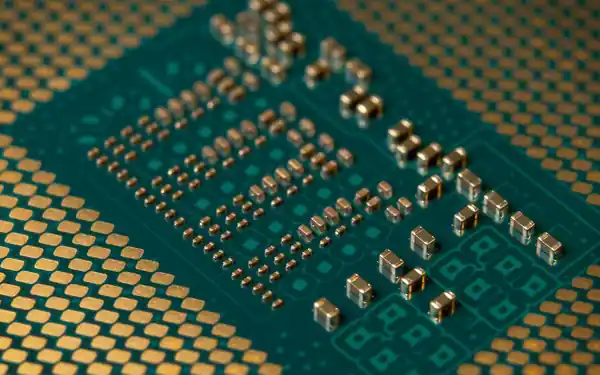
In sum, the reason U.S. Big Tech and Korean semiconductors move together is not coincidence but a value-chain structure that shares a single final demand called AI, along with the macro connecting links of the Nasdaq and exchange rates. Knowing this structure helps you understand why market news ripples across borders. But knowing the structure and nailing the future are entirely different things. The structure only explains "why there's a tendency to react together"; it doesn't tell you "how much, or in which direction, they will move." Correlation is always changing, and in some phases the two markets actually diverge in opposite directions. When reading news, use it as a map for locating which point in the chain the story is about, but the key is the stance of not declaring trades on that alone.
This article is for informational purposes only and is not a recommendation to buy or sell any particular stock. Investment decisions and their consequences rest with the investor.
All content is fact-checked under our editorial standards.