
Understanding Insurance Terms From Scratch — Protection vs. Savings Type, Renewable vs. Non-Renewable
When you read through insurance product descriptions, similar-looking words make decisions hard. If you sign without distinguishing whether it is protection-type or savings-type, renewable or non-renewable, it leads a few years later to the bewilderment of "why did my premium go up" and "why is there no money to get back." This article does not recommend any specific product; it organizes how to actually distinguish the terms and the standards to check for yourself before signing up.
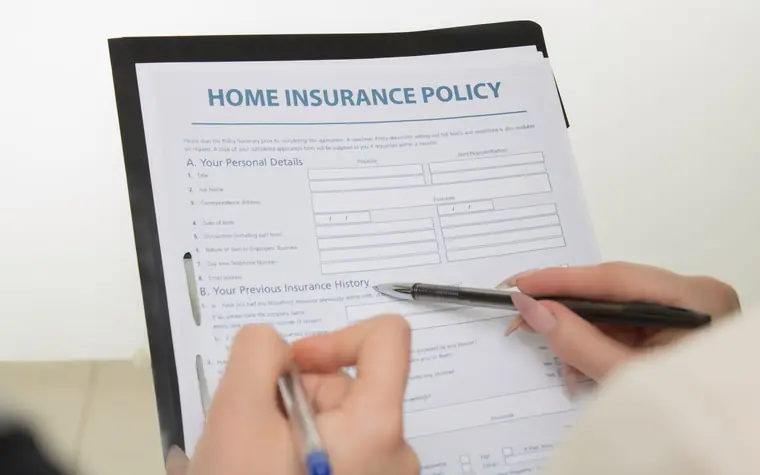
Insurance is ultimately a structure of 'sharing risk'
The root of insurance is simple. Instead of bearing alone a large loss that may strike at an unknown time, many people with the same risk gather a little money and concentrate it on the person who actually suffers an accident. If nothing happens to you, the money you paid is mostly used to help others; if something big happens, you receive an amount far larger than what you paid.
Remembering this principle resolves one misunderstanding, the thought that "it is not a loss only if I get back as much as I paid." The essence of a protection-type product is not saving but risk-sharing. Not getting money back because there was no accident also means you were not sick or hurt that year. Insurance should be judged not by 'whether it was a loss' but by 'whether it blocked a risk I could not bear.'
Another common misunderstanding is the thought that "the more expensive the premium, the better the protection." In reality, even for the same risk, the price splits greatly depending on the expense-loading structure, coverage scope, and whether it renews. So do not just compare the amount; you have to place side by side what and how much you are protected for with that money.
Protection-type insurance and savings-type insurance, what is different
Protection-type insurance focuses on paying the promised insurance benefit when a specific accident such as death, illness, injury, or fire occurs. Since a large part of the premium you pay is used to block risk, the money returned at maturity or on termination may be small or none. Representative examples include indemnity, cancer, injury, and term-life coverage.
Savings-type insurance puts weight on the 'money-accumulating function' such as building a lump sum or retirement funds. It is often designed to return more than you paid at maturity, but because expenses come out first, terminating early can fall far short of the principal. The explanation that "it is insurance and also savings" sounds attractive, but you must remember that it is hard for one product to perfectly fill both purposes at once. It is generally clearer to separately weigh which tool is best suited for the job of risk protection and which for asset building.
A practical tip for distinguishing the two is this.
- If the product's purpose is set to "pays X upon diagnosis of OO," it is closer to protection-type.
- If "receive X at maturity" or "accumulation and interest rate" is front and center, its savings-type character is strong.
- Since one product can mix both characters, look not at the product classification but at whether protection or accumulation is the core.

Renewable and non-renewable — premiums change over time
Renewable type re-contracts at set cycles, newly setting the premium to match your age, risk level, and statistics at that point. Since the probability of an accident rises with age, the premium tends to rise at each renewal. It looks light at first, but the key point is that the burden can actually grow in old age when income shrinks.
Non-renewable type pays the premium set at the time of signup unchanged over a set payment period. The initial burden can be heavier than the renewable type, but since it does not rise later, it is easy to predict the total burden. Which is more advantageous cannot be declared outright; it varies with the coverage period, payment capacity, and health condition. Choosing based only on "it is cheap now" can bring regret later, so if it is renewable you must be sure to check the renewal conditions and the possibility of increases.
Six words you must know
- Premium: The money I pay to the insurer.
- Insurance benefit: The money I receive when an accident occurs. The names are similar and easy to confuse, so remember 'what you pay is the premium, what you receive is the benefit.'
- Protection (coverage): Means what accident is covered up to how much. The scope and limit of coverage determine the product's actual worth.
- Rider: Additional coverage attached to the base contract (main contract).
- Surrender value: The money returned when you terminate before maturity, which can be very small early on.
- Waiting period: A period after signup during which certain accidents are not covered; events occurring in this period may not be eligible for payment.
Grasping just these six words accurately gets you through half the product manual. In particular, it is important to make a habit of checking the conditions under which the insurance benefit is paid, that is, 'for which diagnosis or condition, how much, and starting how many days later' it is given. The large number in ad copy is only the maximum limit; the amount actually received often varies with the diagnosis grade or deductible conditions.
Why attaching endless riders is a problem
Riders fill needed coverage, but each one added raises the premium and complicates the structure. In practice, it is common to redundantly sign up for overlapping coverage across several products, or to spend money on risks with a very low probability of occurring. The more riders, the more it becomes not a good insurance but a contract where you cannot even explain to yourself what you put in and why.
So a recommendable way of thinking is 'coverage you need first.' Do not pick a product first; first write down what risks you cannot bear. Events you 'cannot withstand alone,' such as an earner's early death, large hospital bills, or long-term treatment, are the priorities. Then choose only the coverage needed to fill those risks within your budget, and review the rest when spare money remains; this order prevents over-signing.
Practical checkpoints before signing up
Once you know the terms, check in this order before signing up. First, whether this product is protection-type or savings-type (if it leads with maturity refunds, it has savings-type character). Second, if it is renewable, at what cycle it renews and that the premium can rise as you age. Third, whether, among the attached riders, you have kept only the ones you actually need. Fourth, the waiting period (certain illnesses not covered for a period after signup) and the coverage start date. Fifth, that the surrender value is very small early on (so short-term termination is a loss).
The right answer for a premium is not 'cheap' but 'a level that holds the coverage I truly need and that I can maintain each month without strain.' Use as your standards whether there is overlapping coverage and whether you have filled the risks you cannot bear first.
Frequently asked questions
Q. Premiums feel like a waste, can I just get savings-type only?
Savings-type takes time to recover the principal and its risk protection can be weak. If your purpose is risk preparation, it fits the purpose to first secure needed coverage with protection-type. Savings and protection are tools with different purposes.
Q. Is renewable type always a loss?
Not so. It can fit situations where you only need it for a short period or need to lower the initial burden. However, for long-term maintenance you should weigh the total payments considering the increase burden.
Q. I already have too many riders, how do I sort them out?
Check first the items with overlapping coverage and those with low probability of occurring. However, since terminating can make re-signup hard or worsen conditions, it is safe to go through consultation at an official channel before sorting.
This article is for general financial information and does not recommend signing up for any specific insurance product. Coverage details, premiums, and refund conditions differ by product and individual circumstances, so before signing up be sure to check the policy terms and product manual and consult at official channels such as the insurer and the Financial Supervisory Service (FINE).
All content is fact-checked under our editorial standards.