
Why Stocks Suddenly Plunge: 8 Common Causes (Understood Through Tesla)
When a stock that had been rising nicely until yesterday drops sharply overnight, an investor's first question is, "What blew up?" But a plunge usually doesn't have just one cause; more often, several causes overlap and show up all at once as selling pressure. This article isn't an attempt to declare why a particular stock fell right now; rather, its purpose is to lay out eight "types" of causes that commonly operate when an individual stock plunges, to help you train your own eye for interpreting market news.
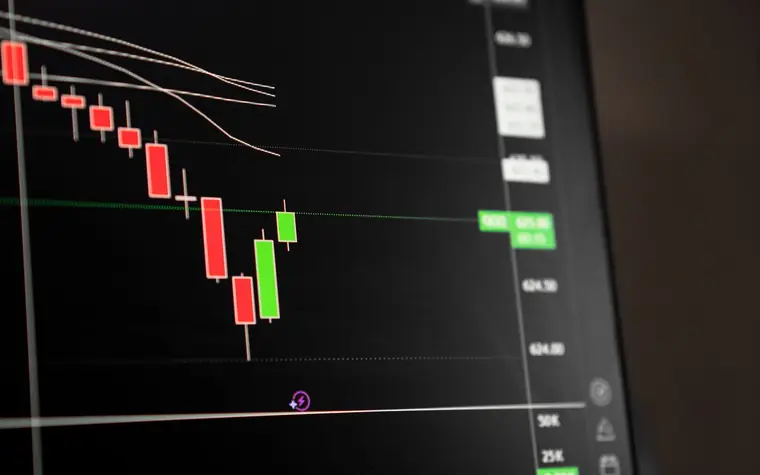
8 Typical Causes That Trigger a Plunge
A stock price is determined by two axes together: 'changes in a company's real value' and 'people's sentiment and money flows.' A plunge appears when one of these two wobbles greatly, or when both worsen at once. The types below are not mutually exclusive and often become chained together. For example, when an earnings shock is announced (cause 1), institutional selling follows immediately (cause 3), and in the process a valuation controversy of "it really was expensive" (cause 4) overlaps, so the decline widens in a stepwise fashion. That's why, rather than seizing on a single news item to declare the cause, it's important to take the stance of seeing how multiple factors interact.
- Earnings shock / guidance cut: When announced revenue and profit fall short of market expectations (an earnings shock), or the company lowers its forward outlook (guidance), estimates of future earnings are marked down wholesale and the stock is rapidly repriced. The higher the expectations were, the bigger the shock.
- Worsening interest-rate / macro environment: When rates rise, the present value of future earnings (the discount rate) falls, and growth stocks that lean on distant future growth are pressed down especially hard. Macro variables like a slowing economy, inflation, and sharp currency swings also dampen risk-asset sentiment broadly.
- Supply-demand outflows (institutional/foreign selling): Regardless of a company's fundamentals, when large institutions or foreign investors withdraw funds, or index rebalancing or a large block of shares hits the market, a short-term plunge occurs. Falling on a surge in trading volume often falls into this category.
- Valuation burden (overvaluation controversy): When a stock has already risen a lot and its PER/PBR are high, even a small piece of bad news can become a trigger for the perception that it's "too expensive," and profit-taking sell orders can pour out.
- Intensifying competition / threats to market position: When a rival's new product, price cut, or feared erosion of market share comes to the fore, doubts about future profit margins grow and selling appears.
- CEO / owner / governance risk: A sudden remark by management, a large stake sale, a control dispute, or a leadership vacuum increases uncertainty about the company's direction and is often reflected in the stock price immediately.
- Regulatory / litigation / policy changes: Tighter government regulation, antitrust or class-action suits, and changes to tax or subsidy policy can shake the profitability of the business model itself, making them plunge triggers.
- A broad market correction: When it's not a particular company's problem but a phase in which the whole index is falling, even good companies get pushed down along with it. At such times, you should look at the overall market flow first rather than hunting for individual bad news.

Why Are Plunges More Dramatic for Growth Stocks? Understanding Through an Example
Large growth stocks like Tesla are often cited as a representative example where the above eight factors are prone to overlapping at once. What matters here is not declaring why it fell a certain percent on a certain date, but understanding "why such stocks are structurally more volatile."
The reasons are as follows. First, growth stocks have expectations for future earnings heavily pre-reflected in the current price, so their valuations are high. You're essentially buying a growth scenario several years out rather than today's earnings, so even a slight rise in rates or wobble in growth expectations widens the decline. Second, when a stock belongs to an industry where competition and regulation change fast, such as EVs, autonomous driving, or energy, it's sensitive to intensifying competition and policy variables. A single price cut by a latecomer rival can shake the entire margin outlook. Third, a single remark by a highly symbolic CEO can become a catalyst. Fourth, with a large weighting in indices and ETFs, it's also greatly affected by supply-demand and broad market corrections. Because passive money moves in and out following the index, large volumes move regardless of the individual stock's own merits.
So when looking at such stocks, it's useful to first recognize the highly volatile structure itself rather than "today's news." An asset with heavily pre-reflected expectations inherently has the property of rising a lot on good news and falling a lot on bad news. Understanding this lets you approach a plunge calmly, from the perspective of "several factors overlapped in an inherently high-amplitude asset," rather than being startled that "a special event blew up." To emphasize again, this is not predicting or declaring the ups and downs of any stock, including Tesla, at a specific point in time; it's explaining a property repeatedly observed across growth stocks in general.
Common Misconceptions
Misconception 1: "A plunge must have one clear reason." In reality, several causes work in a tangle, and the "because of ~" headlines attached in the news are often simplifications applied after the fact.
Misconception 2: "It fell a lot, so now it's cheap." The size of the decline itself is not grounds for undervaluation. If the earnings outlook fell together with it, even the lowered price can still be expensive.
Misconception 3: "A plunge is a rebound signal." After a plunge it may rebound, or it may be the start of a trend decline. The direction depends on whether the cause is temporary or structural, and it can't be known in advance.

Frequently Asked Questions
Q1. Where do I check the cause of a plunging stock?
Cross-checking official disclosures (the electronic disclosure system), the company's earnings materials, and reliable economic media is the basic approach. But no material can 100% pin down "why it fell at that moment," and you should proceed on the premise that multiple interpretations can coexist.
Q2. How do I distinguish an earnings shock from a broad market correction?
The first clue is seeing whether other stocks in the same industry or index fell together. If the overall market declined, it's more likely a macro or supply-demand factor than individual bad news; if only that stock fell sharply, it's reasonable to examine company-specific catalysts.
Q3. Should I buy or sell right away when a stock plunges?
A plunge itself is not a buy or sell signal. You should calmly weigh whether the cause is temporary sentiment or structural deterioration, and whether it has damaged your own investment rationale. Emotional chasing on the way up or panic selling generally magnifies losses.
This article is for informational purposes only and is not a recommendation to buy or sell any particular stock. Investment decisions and their consequences rest with the investor.
All content is fact-checked under our editorial standards.