
What Is HBM? Understanding AI Chip Demand the Easy Way
These days the term HBM shows up in almost every semiconductor news story. What exactly is this unfamiliar acronym that emerged alongside the AI boom, and why is it mentioned so often? HBM stands for High Bandwidth Memory. The name sounds difficult, but the concept itself is simpler than you might think. In this article, we'll unpack what HBM is and why it became so important in the age of AI, using the easiest analogies we can.
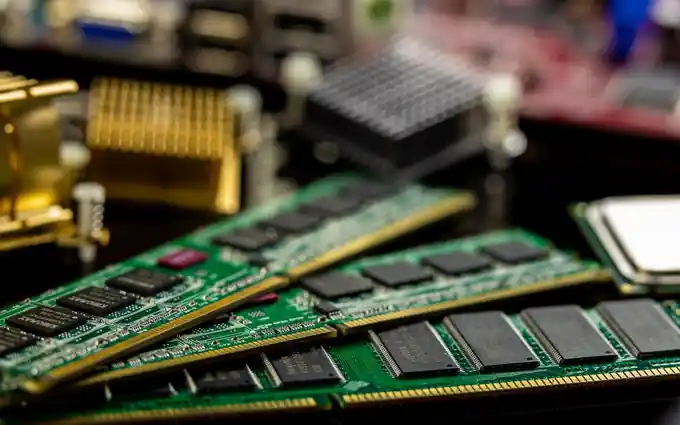
Think of HBM as a 'Highway'
The job of memory chips is to briefly hold data and then hand it off quickly to the processing units (CPU/GPU). Picture the pathway the data travels along as a road. Ordinary DRAM can be likened to a two-lane road. No matter how fast the cars (data) are, if the lanes are narrow, only so many can pass at once.
HBM widens that road into a highway with dozens of lanes. The trick is "stacking." DRAM chips are shaved thin, piled up in multiple layers, and connected vertically through tiny holes (TSVs, or through-silicon vias). Just as an apartment building stacks floors to fit many households on a small plot, HBM stacks many chips in a small area to dramatically widen the pathway the data travels. How much data can be sent at once is precisely what bandwidth means, and it's the reason "High Bandwidth" is in HBM's name.
To sum up, memory performance can broadly be divided into two things. One is capacity, or "how much it can hold," and the other is bandwidth, or "how fast and how much it can exchange." HBM is memory focused on pushing up the latter, bandwidth. The more a task requires streaming huge volumes of data without pause, the more valuable a wide pathway becomes, and AI computation today is a prime example of exactly such a task.
Why Did It Become Important Precisely in the AI Era?
AI, and large language models in particular, process staggering volumes of data at once. The computation is handled mainly by the GPU, but no matter how fast the GPU is, it can't use its full performance if data isn't supplied in time. It's like a chef who, however fast, has to stop cooking when ingredients arrive late. What relieves this "ingredient-supply bottleneck" is HBM, with its wide pathway.
That's why in an AI accelerator, HBM is packaged right up against the GPU. Not only is the pathway wide, but the physical distance is short, which cuts the time data spends in transit and is also advantageous for power efficiency. As AI data centers multiply, demand for high-performance GPUs rises, and as GPUs increase, so does demand for the HBM that pairs with them. Once you understand this chain, in which expanding AI investment flows through to memory demand, it becomes natural to see why news of Big Tech's data center spending spills over into news about memory companies.
There is one caveat here, though. The fact that demand is rising, and when and how much that will translate into a particular company's earnings or stock price, are separate matters. You must always distinguish understanding the direction of an industry from predicting the future of an individual stock, they are entirely different things.

How Does It Differ from Ordinary DRAM?
HBM is fundamentally DRAM too, but it's made and used differently.
- Structure: Ordinary DRAM is laid out on a plane, while HBM stacks multiple layers vertically.
- Bandwidth: HBM has a far wider pathway, delivering more data in the same amount of time.
- Use: Ordinary DRAM is used broadly in PCs, smartphones, and servers, while HBM is specialized for AI accelerators and high-performance computing.
- Difficulty: Because chips must be shaved thin and stacked and connected with precision, manufacturing is demanding and managing production yield is critical.
The Value Chain at a Glance
Completing a single HBM unit goes through several stages. The broad flow can be summarized as follows.
- Design: The company designing the AI accelerator (such as a GPU) sets out the required specifications.
- DRAM manufacturing (front-end): A memory company produces the DRAM chips for HBM itself.
- Stacking and packaging (back-end): The chips are stacked, connected via TSVs, and then combined with the GPU into a single package.
- Materials, equipment, and testing: The materials, equipment, and test companies that support each stage are all linked in.
For example, a single AI accelerator contains both the design company's GPU and the memory company's HBM. It's enough to understand, as an example, that many companies are woven together in a chain like this. Declaring which company is superior or where its stock is headed is not the purpose of this article. Still, knowing this chain lets you gauge for yourself how the ripple effects of news about a bottleneck or a boost at a particular stage might spread up and down the chain. For instance, if back-end stacking capacity falls short, then even if enough DRAM is made, supply of the final product can be constrained. This kind of structural understanding is not grounds for buying or selling any single stock, but rather a framework for reading industry news critically.
Common Misconceptions
"HBM is a new kind of semiconductor." No. HBM is not an entirely different material but one form of memory that stacks DRAM to increase bandwidth.
"It's HBM because the capacity is large." The key is not capacity but how fast and how widely it can deliver data. Bandwidth, not capacity, is its defining identity.
"Since there's AI demand, related companies' stocks will keep rising." Even as demand grows, variables like supply expansion, competition, price, and the economy all operate together. An industry's growth and an individual stock's price do not always move in the same direction.
FAQ
Does HBM go into ordinary consumer products?
At present it's used mainly in specialized areas such as AI accelerators, high-performance servers, and supercomputers. Ordinary PCs and smartphones still use ordinary DRAM for the most part.
They say HBM is hard to make. Why is that?
Because the chips must be shaved very thin, stacked precisely in multiple layers, and connected layer to layer through tiny holes. Since the process is complex, the yield of producing them without defects is cited as a key competitive factor.
Where can I check information on HBM?
Specific figures like per-generation performance or market size change quickly. It's most accurate to check the latest releases directly from official company materials, industry associations, and reliable market research firms. It's best to avoid citing old figures from memory.
This article is for informational purposes only and is not a recommendation to buy or sell any particular stock. Investment decisions and their consequences rest with the investor.
All content is fact-checked under our editorial standards.