
Saving Habits That Keep Your Paycheck From Leaking — Splitting Accounts and Designing Auto-Transfers
The number that appears in your account on payday certainly looked ample, but once the card bills and automatic payments go out, it is always empty. The problem is often not income but the 'structure' where money stays. Rather than a resolve to spend frugally by willpower, laying out the board so that money finds its place on its own lasts far longer.

Why you should split your accounts
If your salary, living expenses, and savings are all mixed in one account, you cannot get a feel for how much you can actually spend right now. When the balance looks ample you spend more, and even your savings leak away into consumption without you noticing. Splitting accounts is a method of physically separating money by purpose so that you can judge your situation just by looking at each account's balance.
At its simplest, you divide into four: a salary account where your pay comes in, a living-expense account holding only one month's living costs, an emergency-fund account that prepares for sudden expenses, and a savings and investment account that grows a lump sum. It may seem cumbersome to have many accounts, but on the contrary the account you need to mind narrows to just the one living-expense account, making management easier.
Save first, spend later: just changing the order changes everything
Most people 'save what is left after spending,' but leftover money rarely appears. The key is to flip the order into save first, spend later. When your salary comes in, set aside the savings amount first and send it to another account, then live only within what remains.
Set the savings ratio to suit your circumstances, but if you set an unreasonable target from the start you will end up breaking the account midway. If you currently have almost nothing left over, it is realistic to start by setting aside even just part of your income first, and to raise the ratio little by little every few months. What matters is not the size of the amount but the order of 'setting aside first' itself.
There is a simple standard to check whether save-first has taken root. If, at month's end, the living-expense account balance is near zero but the planned amount has piled up intact in the savings account, the order is working properly. Conversely, if you are dipping into the savings portion every month-end, it is a signal that the savings amount is larger than your circumstances allow, so rather than feeling guilty it is better to lower the amount one notch and return to 'savings you do not break.'
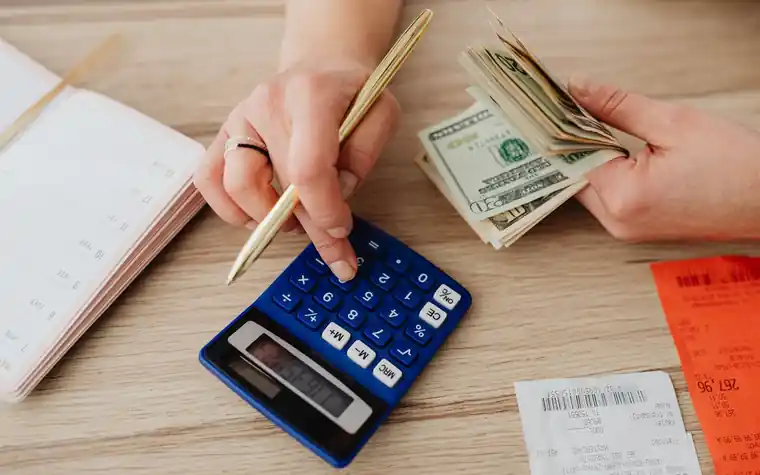
Set auto-transfers for the 'day after' payday
If you leave save-first to willpower, it usually fails. So you hand the order over to a machine with auto-transfers. When you do, I recommend setting the transfer date to the day after payday rather than payday itself. If salary processing is delayed or bank business days do not line up and the balance is insufficient, the auto-transfer fails. Leaving a day's margin lets you avoid most of these mismatches.
The design order is as follows.
- The day after payday: transfer save-first from the salary account to the savings and investment account
- Same day: transfer one month's living expenses from the salary account to the living-expense account
- Leave fixed expenses (utilities, telecom, subscriptions) in the salary account for automatic payment
- Align your card payment date to just after payday to prevent late payment and 'payment-date slippage'
This way, within the single day of payday, money scatters to its proper positions, and all that is left in your hand is one number: the living-expense account balance.
How much emergency fund, and where
An emergency fund is money to prepare for unexpected events like job loss, medical bills, or urgent repairs. It is commonly set at a standard of 3 to 6 months of living expenses. If your income is stable, set 3 months' worth; if your income is uneven like a freelancer's, adjust it to 6 months or more.
An emergency fund is not 'money to grow' but 'money to protect.' So put it somewhere you can withdraw immediately when needed and where the principal will not be shaken. A highly liquid spot such as a savings deposit that allows anytime deposit and withdrawal is suitable, and putting an emergency fund into an investment product with risk of loss or a product locked until maturity does not fit its purpose. Keeping it in a separate account so it does not mix with the living-expense account, out of easy sight, is also a good trick.

The principle and limits of the 'pinwheel' method
The commonly mentioned 'pinwheel method' is a way of opening several installment savings accounts with different maturities, one new one each month, so that from a certain point maturities come around every month. Since maturing funds circulate each month, when you need urgent cash you can cancel only a part without breaking the whole, and the sense of achievement of funding a new savings account each month helps build a saving habit.
However, the limits are also clear. The more accounts, the more cumbersome management is, and if you fail to keep track of auto-transfers and maturities, mistakes actually happen more often. Above all, splitting into several does not make more interest accrue. Interest is determined only by the rate, deposit amount, and period, so it is right to understand the pinwheel method as a tool for habit formation and securing liquidity rather than 'maximizing returns.'
Start small, and automate
The biggest misunderstanding in building up a lump sum is the thought that 'you start once you have gathered a certain amount of money.' On the contrary, it is important to start now, even small, and run the system. Starting small carries less burden, so the probability of quitting midway is low, and you can raise the amount once auto-transfers have become familiar.
In the end, saving is not a battle of willpower but a matter of design. A person's willpower easily crumbles on tired days or days when temptation is strong, but an auto-transfer set once operates every month regardless of mood. Saying automation is stronger than willpower means building the structure in advance so you do not have to repeat resolutions.
How much emergency fund, and where to keep it
A common standard for the target amount of an emergency fund is 3 to 6 months of fixed monthly living expenses. If you spend 2.5 million won a month, the target becomes roughly 7.5 million to 15 million won. What matters as much as the amount is 'where you keep it.' For an emergency fund, liquidity you can pull out immediately takes priority over returns, so a place that withdraws instantly when needed, such as a parking account allowing anytime deposit and withdrawal or a CMA, is right.
For reference, deposits are subject to depositor protection, so from September 2025, up to 100 million won combining principal and interest is protected per financial institution (operated by the Korea Deposit Insurance Corporation). Rather than piling your emergency fund and lump sum into one account, dividing accounts by purpose lets you manage both convenience and safety.
Frequently asked questions
Q. Do I really need exactly four accounts?
There is no fixed correct answer. If management feels overwhelming, starting with three, salary, living expenses, and emergency fund, is enough, and you can further split savings accounts by goal. The key is not the number but 'not letting money mix across purposes,' and tying the movement between accounts together with auto-transfers.
Q. To increase savings, do I have to fill up the emergency fund first?
Many people do both in parallel. However, if you have no emergency fund at all, it is safer to secure a minimum emergency fund before greatly increasing lump-sum savings. Without an emergency fund, when something urgent happens you end up having to fill it with savings or loans after all.
Q. What happens if I set an auto-transfer but it fails due to insufficient balance?
Usually that cycle's transfer is skipped or retried, and if it repeats, the savings plan goes off track. Setting the transfer date to the day after payday and leaving a small buffer balance in the salary account can reduce such failures.
This article is for general financial information and does not recommend signing up for, buying, or selling any specific product. Rates and terms differ by time and individual circumstances, so before an actual transaction please check with the relevant financial institution and official channels such as the Financial Supervisory Service's financial-consumer information portal 'FINE.'
All content is fact-checked under our editorial standards.