
Warranty Periods in Korea Differ by Product: 1 Year, 2 Years, 3 Years for Core Parts, and You Can Ask for an Exchange or Refund When the Same Defect Returns After Two Repairs
When a TV or washing machine you bought breaks down a year and a few months later, you start wondering whether a free repair is still possible. The yardstick is the item-by-item quality warranty period in the Fair Trade Commission's Consumer Dispute Resolution Standards. The periods differ by product, so assuming "one year" for everything can cost you. Based on the notice in force since December 27, 2024 (FTC Notice No. 2024-32), this guide covers warranty periods for appliances and IT devices, how many repairs lead to an exchange or refund, and what applies when parts are unavailable.
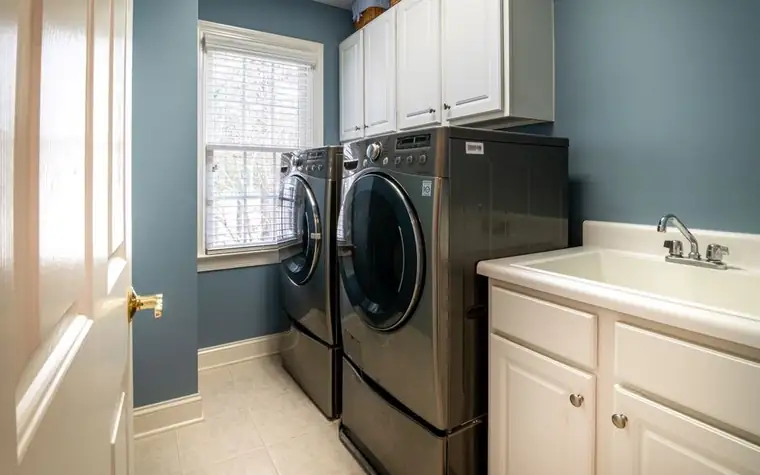
Warranty periods differ by item: mostly 1 year, only some 2 years
According to the annex of the notice, TVs, refrigerators, washing machines, microwaves, vacuum cleaners, laptops, tablets and desktops are covered for 1 year.
Cooling-only air conditioners, electric fans, electric blankets and heaters get 2 years, while combined cooling-and-heating air conditioners get 1 year. So even for air conditioners, the period depends on the type.
Smartphones and mobile phones get 2 years, but the battery is an exception at 1 year. Items with no set period follow a similar item, and if there is no similar item, 1 year applies.
If the box or warranty card states a longer period, the manufacturer's promised period takes priority, so check the warranty card first.
Core parts are covered longer than the main unit
Even after the main warranty ends, some items let you ask for free repair of core parts for longer.
Washing machine motors, refrigerator compressors, and compressors in clothes dryers and clothing care machines are covered for 3 years.
Panels in LED TVs and LED monitors get 2 years, but for products with a timer the consumer can check, the period is treated as over once it passes 5,000 hours.
The main board of desktops and laptops is also 2 years, unlike the 1-year main unit. Free repair of core parts applies only to performance or function defects arising under normal use.
What you can get differs at 10 days, 1 month and within the warranty period
The notice splits cases by timing, for a performance or function defect under normal use that needs a major repair.
If you raise the problem within 10 days of purchase, the remedy is an exchange or a refund of the purchase price. Within 1 month of purchase, it is an exchange or free repair.
After 1 month but within the warranty period, you first get free repair. If repair is impossible, it moves to exchange or refund.
So when a new product seems off, do not put it off to "use it a bit more." Report it to the store or service center while the dates are still on your side and keep a record of the filing.

Two repairs for the same defect and it fails again: treated as unrepairable
The notes for electronics and smartphones contain this rule. Within the warranty period, if the same defect recurs after up to 2 repairs, or defects in several parts recur after up to 4 repairs, the case is treated as one where repair is impossible.
Once it counts as unrepairable, the principle is an exchange, and if an exchange is difficult, a refund of the purchase price.
Smartphones add one more detail. The count covers the most recent 1 year (from the repair filing date), and a refurbished-phone exchange counts as one free repair.
That is why service center receipts and repair statements are your proof of the count and should be kept to the end.
After the warranty ends, the parts holding period may still help
The parts holding period is different from the warranty period and is counted from the manufacturing date. If only the year and month are printed, the last day of that year or month is treated as the manufacturing date.
By item it is 9 years for TVs and refrigerators, 8 years for air conditioners, 7 years for washing machines, and 4 years for laptops, tablets, desktops and smartphones.
If a repair is impossible within this period because the part is unavailable, then within the warranty period the remedy is an exchange or a refund of the purchase price.
After the warranty has ended, there is a standard that refunds the straight-line depreciated remaining value plus 10% of the purchase price. The refund is capped at the purchase price, and depreciation is calculated monthly using the useful-life table in the annex.
Breakage caused by the consumer falls outside this standard
The premise of the standard is "a performance or function defect arising under normal use."
A cracked screen from a drop or a phone dropped in water is not a manufacturing defect, so even within the warranty period the repair is paid.
However, when the part is within the parts holding period but a repair is impossible because the part is unavailable, there is a separate standard under which even a consumer-caused failure gets an exchange after paying the amount a paid repair would cost. If the service center says the repair is paid, ask what basis it relies on.
The Consumer Dispute Resolution Standards are a reference for agreement between the parties or mediation at the Korea Consumer Agency, so they do not automatically have legal force.

Order of steps and related guides
1) Confirm the purchase date from the receipt and warranty card, 2) compare the notice's period for your item with the period on the box or warranty card and take the longer one, 3) if something seems wrong, file with the service center and keep the date, 4) when the repair count approaches 2 or 4, ask for an exchange or refund, 5) if you cannot agree, consult the 1372 Consumer Helpline or the Korea Consumer Agency.
Before handing in a smartphone, protect your data first with our guide on why automatic backup fails. When buying or selling secondhand, the guides on checking the IMEI and the factory reset order help.
When choosing a new phone, also see what to check after the repeal of the handset subsidy law. This article summarizes the FTC notice and its annexes as general information and does not replace advice on an individual dispute. The basis is FTC Notice No. 2024-32 (in force from December 27, 2024), Annexes II and III.
All content is fact-checked under our editorial standards.