
National Lung Cancer Screening Is for Ages 54-74 With 30+ Pack-Years -- Smoking History Is Checked From Questionnaires, Not Memory, and Quitters Stay Eligible for 15 Years
If you have smoked for years and your checkup notice does not mention lung cancer, it is easy to assume you are not eligible. Korea's national lung cancer screening is not for everyone. It is a test offered every two years only to people aged 54 to 74 whose smoking history of 30 pack-years or more is on record, and this year's screening period ends in late December. This article sets out the eligibility rules, how smoking history is verified, the cost and the result categories, based on the Ministry of Health and Welfare's 2024 National Cancer Screening Program Guide and National Cancer Center guidance, checked on October 19, 2026.
You must be 54 to 74 and have at least 30 pack-years
Lung screening is not like stomach or colorectal screening, where age alone qualifies you. Of the six national cancer screenings set by the Cancer Control Act enforcement decree, only lung cancer limits eligibility to a high-risk group. The program guide defines the target as "smokers aged 54 to 74 with a smoking history of 30 pack-years or more" and sets the interval at every two years. If you do not meet this standard, the screening notice from the National Health Insurance Service will not include lung cancer. How the age and interval differ for each cancer is covered separately in our summary of the six national cancer screenings.
A pack-year is packs per day multiplied by years smoked
A pack-year is calculated by multiplying the average number of packs smoked per day by the number of years you smoked. One pack a day for 30 years is 30 pack-years, and two packs a day for 15 years is also 30 pack-years. By contrast, half a pack a day would take 60 years to reach 30 pack-years, which the age cap of 74 makes hard to reach in practice. If the amount you smoked changed over the years, multiply by period and add the results. This is only a rough self-check; whether you are actually eligible is decided by the method below.
Smoking history is verified from questionnaire records, not from memory
This is the point people miss most often. The program guide says smoking history and current smoking status are confirmed from only two kinds of records. One is the questionnaire from a general health checkup (including the life-transition checkup) taken within the two years before the screening year. The other is the questionnaire you filled out when joining the national health insurance smoking cessation treatment program. Your smoking history must be on record in one of these before the insurer can select you. If you filled in the smoking section of your checkup questionnaire loosely or left it blank, you may be left off the list even though you actually meet the condition. At your next general checkup, fill in the smoking items accurately.
If you quit, you stay eligible for 15 years, up to age 74
A person who has once been selected and received national lung screening remains eligible even after quitting, as long as it is within 15 years of quitting and before turning 74. The guide on getting medication costs reimbursed under smoking cessation treatment explains support if you have started to quit, and the cessation-treatment questionnaire mentioned above can itself serve as a smoking-history record. On the other hand, if you are currently being treated for lung cancer, you are deferred from screening until the year before your special copayment period ends.

Check eligibility on the insurer's website and bring photo ID
You can check as an individual on the National Health Insurance Service website (www.nhis.or.kr) under Health iN, My Health Management, Health Checkup Information, then Check Eligibility. A joint certificate or a simple authentication certificate is required. At the screening institution, bring photo ID such as a resident registration card or driver's license. Lung screening is not available at ordinary clinics; it is offered only at general hospitals that take part in the smoking cessation support program and meet the equipment standards, so ask in advance whether the hospital qualifies and when you can book. It also helps to read this together with how to confirm your general national checkup eligibility.
The copayment is 10%, and the lower half by premium pays nothing
National health insurance pays 90% of the screening cost and you pay 10%. According to the program guide's fee schedule, a low-dose chest CT costs KRW 102,830 to 105,680 and the follow-up result consultation costs KRW 16,370, so on that basis your copayment comes to a little over KRW 10,000. Medical aid recipients and insured people whose premium is at or below the selection amount, the lower 50%, pay nothing. In 2024 the selection amount was KRW 125,000 a month for employee subscribers and KRW 67,500 a month for self-employed subscribers, but it is reset every year, so confirm this year's standard with the insurer. One caution: additional tests after an abnormal finding receive no cost support.
Results come in five categories, and category 3 and above is followed up
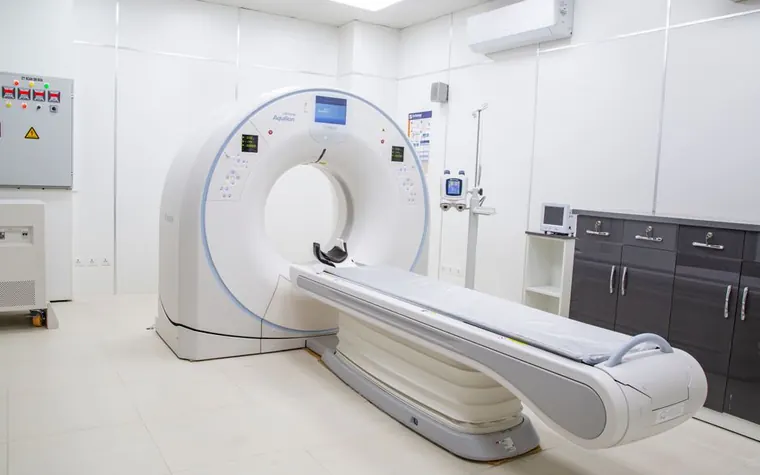
The screening uses a CT with a reduced radiation dose, and after a specialist reads it, the result notice arrives by mail or mobile within 15 days of the exam. The final category is 1 no abnormal finding, 2 benign nodule, 3 borderline nodule, 4 suspected lung cancer, and 5 highly suspected lung cancer, and categories 3, 4 and 5 become follow-up cases that the public health center tracks for additional tests and confirmation. Being told you have a nodule does not mean you have lung cancer. Always ask the doctor directly at the consultation which test you need and when. If you have already been diagnosed with cancer, first check the steps for registering for the special copayment benefit.

Summary of the steps: the exam by the end of December, the consultation by the end of January
Step 1, check. Confirm on the insurer's website whether you are eligible for lung screening this year. If you are not but think you should be, first look at how your smoking history was recorded on your general checkup questionnaire from the past two years.
Step 2, book. Choose a general hospital that offers lung screening and bring photo ID. The screening period runs through the end of December of that year.
Step 3, follow-up consultation. The result consultation after lung screening can be taken until the end of January of the next year, and smoking cessation counseling is recommended even if nothing abnormal is found.
This article is a guide to the program and does not replace diagnosis or treatment. Eligibility rules and costs can change from year to year, so confirm this year's standards with the National Health Insurance Service (1577-1000) or your public health center, and if you have symptoms such as cough, coughing up blood or weight loss, see a doctor rather than waiting for screening.
All content is fact-checked under our editorial standards.