
National Cancer Screening Starts at a Different Age for Each Cancer — Stomach at 40 Every Two Years, Colorectal at 50 Every Year, and a 10% Co-payment
Some people take their health-screening notice to a clinic and are told they are not eligible for cancer screening. The national cancer screening programme is a separate scheme from the general health check, and each cancer has its own starting age and interval. The basis is Article 11 of the Cancer Control Act and Article 8 with Annex 1 of its Enforcement Decree. Stomach cancer starts at 40 on a two-year cycle, colorectal cancer at 50 every year, and liver cancer runs every six months. Here is who is covered and what it costs.

There are six cancers, not more
Article 8(1) of the Enforcement Decree fixes the covered cancers at six: stomach, liver, colorectal, breast, cervical and lung. Thyroid cancer, despite being the most frequently diagnosed cancer in the country, is not part of the programme. Lung cancer is the most recent addition, brought in during 2019. Under Article 7, those covered are National Health Insurance subscribers and their dependants, together with Medical Aid recipients. Eligibility therefore arises automatically, and the insurance service notifies those due. That notice arrives in the same envelope as the general health check notice, but the items and intervals are not the same.
Each cancer has its own age and interval
This is where most of the confusion sits, so here it is as a table.
| Cancer | Eligible | Interval | Method |
|---|---|---|---|
| Stomach | Aged 40+, all | 2 years | Upper endoscopy |
| Colorectal | Aged 50+, all | 1 year | Faecal occult blood test |
| Liver | Aged 40+, high risk | 6 months | Ultrasound + serum AFP |
| Breast | Women aged 40+ | 2 years | Mammography |
| Cervical | Women aged 20+ | 2 years | Cervical cytology |
| Lung | Aged 54–74, high risk | 2 years | Low-dose chest CT |
Two points are where mistakes happen. Colorectal screening is annual, so having had it last year does not remove you from this year's list. And cervical screening starts at 20, which means women in their twenties are already eligible but often assume otherwise because they are not yet in the general health check cohort.
Two-year items are split by birth year
For the items on a two-year cycle — stomach, breast, cervical and lung — the insurance service splits the years by the last digit of the birth year. Even-numbered years cover those whose birth year ends in an even digit, odd years the rest. So "nothing came last year but something came this year" is not an omission; it is the design. The reverse also holds: being screened in a year that is not yours means the visit is billed as ordinary treatment rather than national screening, and the whole cost falls on you. Checking eligibility on the insurance service's website or app before booking is the safer route.
Liver screening has four qualifying conditions
Liver is the only item screened every six months, that is twice a year. In exchange it covers not everyone over 40 but a defined high-risk group. The criteria published by the National Cancer Information Center are cirrhosis, hepatitis B surface antigen positive, hepatitis C antibody positive, and chronic liver disease caused by hepatitis B or C. The insurance service identifies this group from treatment records, so if you believe you qualify and no notice has arrived, it is worth confirming. If a screening result falls outside the reference range, what happens next is set out separately.

Lung screening means 54–74 and 30 pack-years
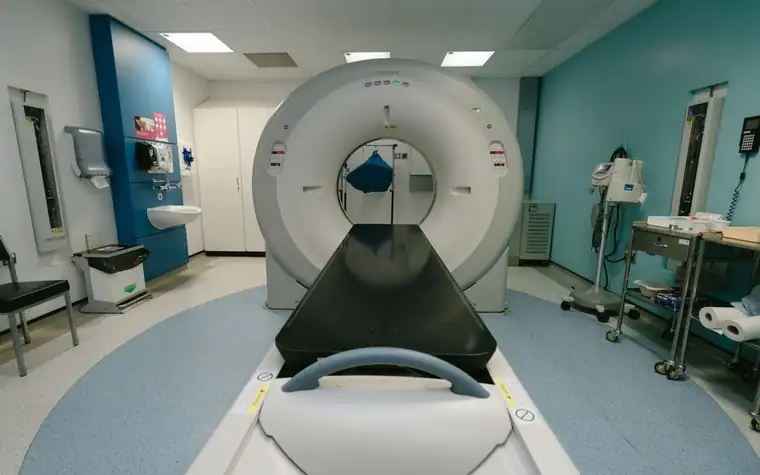
Lung screening requires the age condition and the smoking condition to be met at the same time. The age range is 54 to 74 inclusive, and the smoking history threshold is 30 pack-years or more. A pack-year is packs per day multiplied by years smoked, so a pack a day for 30 years is 30 pack-years, and two packs a day for 15 years is also 30. The test is low-dose chest CT, the only CT in the programme. Because establishing eligibility requires smoking history, notification works differently from the other cancers, so contacting the insurance service directly is quicker if you think you qualify.
What it costs — 10 per cent, or nothing
The state and the insurance service carry most of the cost. Households in the upper 50 per cent by health insurance contribution pay 10 per cent of the screening fee. Households in the lower 50 per cent and Medical Aid recipients pay nothing. There are two exceptions in the other direction: colorectal and cervical screening are free regardless of income. All of this refers to the screening itself. Taking a biopsy during an endoscopy, or choosing sedation, is billed separately, and confirmatory tests and any subsequent treatment are not part of the programme. In a year with heavy medical spending, check the out-of-pocket maximum refund as well.
If no notice arrived, or the form is lost
Screening does not require the paper notice. Take photo ID to a designated screening provider and the provider checks your eligibility against the insurance service's records. Notices commonly go astray after a change of address, so checking for yourself is more reliable than waiting. Note too that the screening year ends on 31 December. Appointments jam up in the last quarter every year, so booking in the first half of an eligible year is the practical move. If other chronic-disease markers came back flagged on the same visit, start by reading which band the number falls in.
In short
There are six cancers, and the defaults are stomach from 40 every two years, colorectal from 50 every year, breast from 40 every two years, cervical from 20 every two years. Liver is high-risk only, every six months; lung is ages 54–74 with 30 pack-years, every two years. Two-year items alternate by the last digit of your birth year, so check eligibility before booking, and on cost, the upper 50 per cent pay 10 per cent while everyone else pays nothing, with colorectal and cervical free for all.
This article sets out the eligibility, intervals and costs of the national cancer screening programme; it is not a substitute for medical diagnosis or advice on whether a particular test is needed or on how to interpret a result. Confirm eligibility and your cost share with the National Health Insurance Service (1577-1000), and the test items and procedure with your screening provider. Sources: Cancer Control Act Article 11, Enforcement Decree Articles 7 and 8 and Annex 1, and National Cancer Information Center guidance on the national cancer screening programme (verified August 2026).
All content is fact-checked under our editorial standards.