
The Infant Health Checkup Has Eight Rounds from 14 Days to 71 Months -- It Is Free, but Each Round Closes After Its Window, and Developmental Screening Starts at Round 3
When a baby arrives, keeping up with the vaccination schedule is already a lot, and the infant health checkup notice from the National Health Insurance Service (NHIS) is easy to push aside. These checkups run from 14 days after birth to 71 months, eight rounds in all, and each round can only be taken within its own window. Based on NHIS guidance, this post sets out the timing of each round, the cost, the developmental screening that starts at round 3, and what to know if you miss a window.
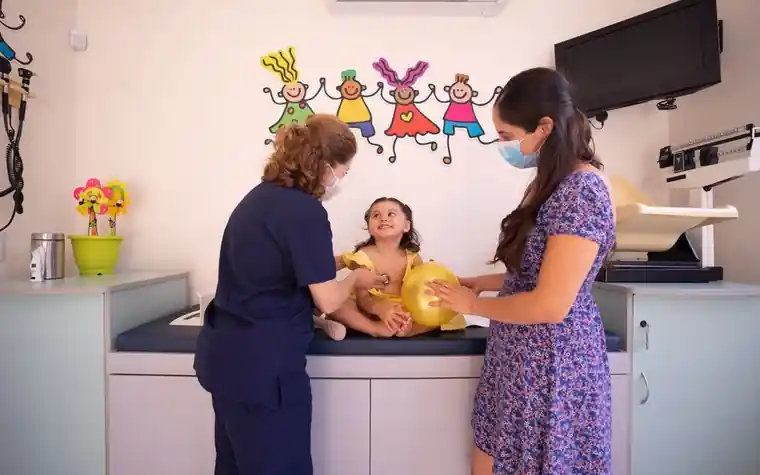
The infant and child health checkup has eight rounds from 14 days to 71 months
According to the NHIS, the program covers infants and young children from 14 days after birth up to 71 months, in eight rounds. The first checkup starts around two weeks after birth and the last takes place at 66 to 71 months, just before elementary school. Each visit reviews growth such as height and weight, development and health education, so it is a chance to follow your child's growth even when there are no obvious symptoms.
The timing of each round is set by months since birth
The windows given by the NHIS and local health centers are as follows: round 1 at 14 to 35 days, round 2 at 4 to 6 months, round 3 at 9 to 12 months, round 4 at 18 to 24 months, round 5 at 30 to 36 months, round 6 at 42 to 48 months, round 7 at 54 to 60 months and round 8 at 66 to 71 months. They are counted in months since birth, not calendar age, so it helps to write the start and end dates of each round on a calendar based on your child's birthday. For premature babies or others whose schedule may differ, check the period printed on the checkup notice first.
There is no out-of-pocket cost for the checkup
The NHIS states that the infant health checkup has no out-of-pocket cost. For people enrolled in health insurance the NHIS pays the full cost, and for Medical Aid recipients the state and local governments cover it. Any extra tests or treatment you receive separately at the clinic may be billed as ordinary medical care, so if you are offered additional items on the day, ask first whether they are part of the checkup.
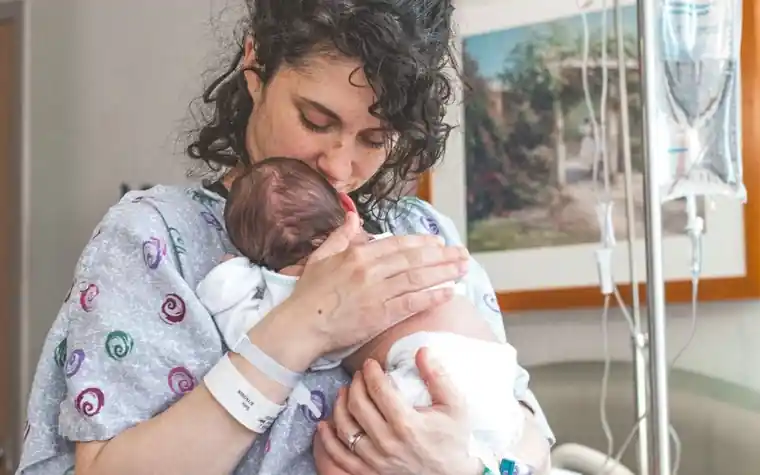
The notice arrives electronically, and you bring it with an ID
The NHIS sends the checkup notice electronically to the employee subscriber or head of household, and sends a postal copy to those who have not opened it. You can choose any infant checkup facility nationwide regardless of where you live. A guardian must fill in the questionnaire personally before the examination, so jotting notes on your phone about feeding, meals, sleep and changes in speech and behavior makes the consultation much more concrete. You can check eligibility and nearby facilities on the NHIS Health-iN site or the call center (1577-1000).
From round 3, a developmental screening test is added
The basic checkup consists of an interview and examination, body measurements and health education. From round 3 the developmental screening test (K-DST) is added, and from around round 4 an oral checkup is provided as well. The NHIS lists oral checkup windows separately, at 18 to 29, 30 to 41, 42 to 53 and 54 to 65 months, so look at the oral section of the notice too. From this stage guardians answer questions about speech, hand movements and play with peers, so describing what you have observed honestly is important.
"In-depth evaluation recommended" is not a diagnosis
The NHIS explains that an "in-depth evaluation recommended" result on the developmental screening is a suspicion stage, not a diagnosis. Screening can be affected by the child's condition that day or by how the questionnaire was answered, so if the result worries you, the next step is to talk with a pediatrician and decide whether a detailed test is needed. Some local governments support the cost of a detailed test for children recommended for in-depth evaluation at rounds 3 to 8; according to Geumcheon-gu guidance, the maximum is 200,000 won for insurance subscribers and dependents and 400,000 won for Medical Aid, basic livelihood and next-lowest income households. Amounts and documents differ by area, so ask the health center where you live first.
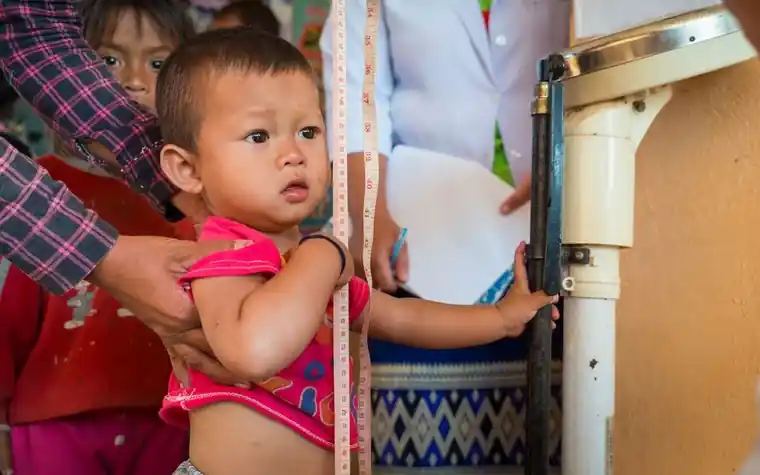
If you pass the window, you cannot take that round
The point the NHIS stresses most is that each checkup can be taken only within its own window. Once the period passes, that round is skipped, so when you visit the pediatrician for vaccinations, ask in advance whether the checkup can be done the same day to save trips. If you are in a daze right after birth, check the round 1 window before leaving the hospital, and afterwards write the checkup deadlines next to the vaccination record. For other benefits for parents, see the National Pension childbirth credit and utility discounts for families with several children, and for adult checkups see who is eligible for the national health checkup and how checkup result categories work.
The order of steps before and after each checkup
First, write the start and end dates of the next round on a calendar, counted from your child's birthday. Second, bring the NHIS notice and the guardian's ID, and take notes on your child's usual behavior. Third, from round 3, record the screening result and the doctor's explanation together. Fourth, if an in-depth evaluation is recommended, do not panic; look into a pediatric consultation and local government support at the same time. This post is general information and not a judgment about any child's condition. Please confirm exact timing and how to read results with the checkup facility's doctor and the NHIS (1577-1000).
All content is fact-checked under our editorial standards.