
Jeju Global Education City International Schools: Features and What to Know
Jeju Global Education City is a name that never fails to come up when international schools in Korea are discussed. Unlike individual schools scattered across a city center, its biggest distinguishing feature is that several international schools are gathered in one area, forming a single "education village." Yet once you actually start preparing, questions trail one after another: "I heard Korean nationals can go there too?", "What is dormitory life like?", "Does the whole family have to move?" This article does not recommend a particular school or rank them; it lays out the concepts and living perspectives needed to understand the "framework" of Jeju Global Education City.
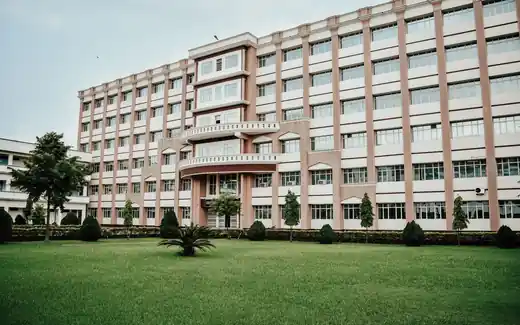
What is Jeju Global Education City?
Jeju Global Education City is an education-centered district created as part of the Jeju Free International City development plan. The project has been led by the Jeju Free International City Development Center (JDC) under the Ministry of Land, Infrastructure and Transport, and it is characterized by planning international schools together with residential and living facilities in the Daejeong-eup area of Seogwipo City. Behind its creation lay the aim of "absorbing domestically the early-study-abroad demand that had been flowing overseas." The idea was to build an environment in Korea where students could receive international-level education without going abroad.
As a result, this district is not simply a place with only school buildings; it has developed into a form where several international schools sit within one zone, with residential complexes, commercial facilities, and cultural spaces arranged around them. Because the exact number and roster of resident schools and the development status change over time, it is safest to confirm the latest information directly from JDC official materials or each school's website.
Features of the international schools here
The points that set Jeju Global Education City's international schools apart from other city-center schools can be organized into a few main features.
- Resident and boarding structure — Many are designed on the premise of a "resident" model where students and families live in the area while attending, and some accept students from other regions through boarding operations.
- Agglomeration effect — With several schools gathered close together, educational infrastructure and community are concentrated in one area.
- Diverse curricula — Each school runs different curricula such as British, American, and IB. Which school uses which curriculum differs by school, so individual confirmation is needed.
However, "agglomeration" does not mean "all the schools are the same." Even within the same area, each school differs in its founding body, curriculum, academic operation, and atmosphere. Rather than judging them as a group based only on the district name, it is important to take an attitude of examining each school of interest separately.
Understanding the Korean-national admission structure
One reason Jeju Global Education City drew particular attention is that its structure is relatively open to Korean-national admission. In general, foreign schools in Korea often set requirements of foreign nationality or overseas residence for a certain period, whereas Jeju Global Education City's international schools are known to be designed with a relatively low threshold on such conditions. This ties into the creation aim of absorbing early-study-abroad demand domestically.
Here the phrase "relatively" is important. It means there is a channel through which Korean nationals can apply — not that anyone is automatically admitted with no conditions at all. Actual conditions such as the quota per grade, English ability requirements, and whether transfers are possible differ by school and year. Also, because domestic credit recognition is a matter that can affect advancement, military service, and transfers, you must be sure to confirm the concept and requirements before admission through the relevant school and education authority.

Living, commuting, and settlement considerations
Considering Jeju Global Education City is closer to deciding on the family's way of life together, not simply choosing one school. The realistic points to examine are as follows.
- Form of residence — The direction of preparation changes completely depending on whether the whole family relocates to Jeju, only the student is sent to a dormitory, or only one parent lives there together.
- Housing and living costs — Beyond tuition, housing and living costs are incurred separately. Since local real-estate prices and the cost of living fluctuate greatly, it is best to look into the latest information directly.
- Movement and transportation — You should map out your movement routes in advance, such as commuting within Jeju and using flights when traveling to and from the mainland.
- Family careers and emotional life — The changes the whole family must bear are large, such as the parents' workplaces, siblings' schools, and the distance from your existing base of life.
These factors greatly sway satisfaction independently of the school's educational quality. No matter how good the educational environment is, if the family's life is shaken, the child's adjustment can also become difficult. So during the school visit or information-session stage, it is best to ask not only about the curriculum but also about housing, commuting, after-school life, and the local community, and to map out the actual routes. If possible, staying locally even briefly to check the sense of daily life firsthand also helps the decision.
Common misconceptions
"Any Korean national can get into Jeju Global Education City" — Having a relatively open channel is different from being admitted with no conditions. The actual difficulty of entry can vary widely depending on each school's quota, English requirements, and transfer conditions.
"Since they're gathered in one area, the schools are all similar" — The founding body, curriculum, and operating style differ by school. Treating them as identical just because they are in the same area makes it easy to miss the place that actually fits your child.
"Once you pick a school, everything else takes care of itself" — It is a matter that requires deciding on residence, living costs, and whether the family relocates. Choosing a school is only part of the overall plan.

Frequently asked questions (FAQ)
Q1. How many schools are there in Jeju Global Education City?
The number and roster of resident international schools have changed with the progress of development. Rather than fixing on a specific number, we recommend confirming the current status of operating schools directly from JDC official materials and each school's website.
Q2. Is tuition cheaper than at city-center international schools?
Tuition differs greatly by school, grade, and curriculum, and must be reckoned on a total-cost basis including boarding and living costs, so it is hard to compare uniformly. It is most accurate to confirm specific amounts in each school's disclosure materials and admissions guidelines.
Q3. Where do I check the Korean-national admission requirements?
Whether Korean nationals can apply, English ability requirements, and matters related to credit recognition differ by school and policies may change. Please confirm the latest standards directly through the admissions office of the school you are interested in, the relevant education authority, and JDC's official guidance.
All content is fact-checked under our editorial standards.