
Apartment defect claims in Korea — the two, three, five and ten-year rules and when the clock starts
Live in a newly built apartment long enough and one day you notice a water stain spreading across the bathroom ceiling, balcony tiles lifting, wallpaper puckering beside the front door. Call the builder and the answer is usually the same: "That's outside the defect liability period." To know whether that is true, you first have to understand that the defect liability period is different for each type of construction work. There is no single period that applies to an apartment as a whole.

Not one period but four — two, three, five and ten years
Appendix 4 of the Enforcement Decree of the Multi-Family Housing Management Act divides construction into categories and assigns each its own liability period. Within the same home, how long you can claim depends entirely on what broke.
- Two years — finishing work: plastering, joinery, painting, wallpapering, tiling, stonework, built-in furniture, kitchen fittings, home appliances
- Three years — equipment and systems: heating, cooling, ventilation and air conditioning, water supply and drainage, sanitary equipment, gas installations, electrical and power systems, windows and doors, carpentry, landscaping, renewable energy, telecommunications, home networks, fire safety, insulation, outdoor water supply and sanitation, miscellaneous work
- Five years — structural and waterproofing work: site preparation, reinforced concrete, steel frame, masonry, roofing, waterproofing
- Ten years — load-bearing structure and ground work: partial or total collapse of the structural frame, or cracking and subsidence severe enough to cause, or risk causing, a structural safety hazard
The single biggest source of dispute here is water leakage. Treated as a tile defect, a bathroom leak falls under the two-year rule; treated as a failure of waterproofing work, it falls under five years. If you were told in year four that "the finishing period has expired," the first question is whether the waterproofing layer is the real culprit. Rain seeping in around window frames splits the same way, depending on whether it is a window defect (three years) or a waterproofing defect (five years).
Half the battle is knowing when the clock starts
What most people miss is the start date. It is neither the completion date nor the date of your purchase contract.
- Exclusive areas (inside your unit): from the day the unit was handed over to the occupant
- Common areas (stairs, corridors, lobby, underground parking, rooftop): from the date of the use approval inspection
That means households that moved in later still have more time left on defects inside their own unit. The reverse is true for common areas: because the clock runs from use approval regardless of when you moved in, a late arrival may find that much of the common-area period has already elapsed. Mould in your bedroom and cracks in the basement garage are measured from different starting points.
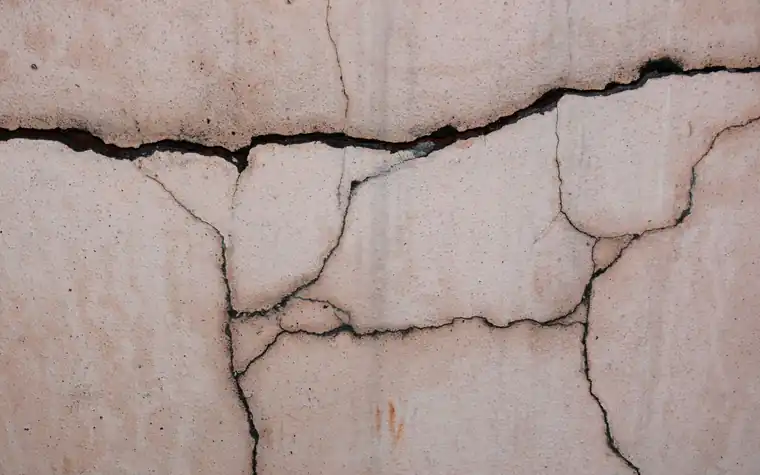
The first step is documentation, not repair
When you find a defect, the instinct is to fix it yourself and move on — but paying for the repair out of pocket destroys the evidence that the defect ever existed. Reverse the order.
- Photograph or film it with a visible date record. For leaks, capture both the wet state and the dried state; for cracks, place a ruler alongside so the width is legible.
- File with the management office or the residents' representative body in writing. A phone call alone makes the date of your claim hard to prove later.
- Submit a defect repair claim to the builder. What matters is that the claim falls inside the liability period, so if expiry is close, file first and establish the cause afterwards.
- If no repair follows, or the builder rejects it as "not a defect," move to the next stage.
When you are refused — the defect review and dispute mediation committee
Disagreeing with the builder does not mean going straight to court. The Defect Review and Dispute Mediation Committee under the Ministry of Land, Infrastructure and Transport rules on whether something is a defect and mediates the dispute. Applications and case status are handled through the defect management information system. Individual households may apply, and residents' representative bodies often file on behalf of an entire complex.
The committee reviews and rules on whether a defect exists, and where one is confirmed, it specifies the repair method and deadline. The practical advantage over litigation is cost and time. The category-by-category periods and the original text can be checked directly at the Korean Law Information Center under Appendix 4 of the Enforcement Decree.
The repair guarantee deposit — money that survives the builder
If the builder goes bankrupt or simply stops answering, there is no one left to claim against. For exactly this situation, the project proprietor must deposit a guarantee securing defect repairs. It is held in the form of a guarantee certificate by the management body, and can be drawn on when the builder fails to perform its repair obligations.
The practical point is that the deposit is also returned in stages as liability periods expire. The portion corresponding to each expired category flows back to the builder, so delaying a claim means you lose not only the right to claim but the funding behind it. How much remains for your complex can be confirmed through the management office or the residents' representative body.
What you wrote at the pre-occupancy inspection still counts
The items you listed at the pre-occupancy inspection are not merely informal notes. They stand as a record that the defect existed at that point in time. If an item appeared on that list and was never repaired, it becomes evidence against any later claim that the damage came from "misuse after move-in."
So keep your own copy of the inspection list and the builder's response to it. Three or four years later, when a dispute arises, households with those documents and households without them reach different outcomes. Even where the management office holds the original, records do go missing when the management body changes hands.
What to do before the clock runs out
Years two and five matter most. Because everything visible — wallpaper, tiles, kitchen units — becomes unclaimable once two years pass, it is worth walking through the whole home at around the eighteen-month mark. Checking whether doors bind, whether closed windows leave a gap, whether wardrobe doors hang level, and whether any wall grows mould repeatedly will catch most of it.
One more thing: where the same defect keeps recurring, record it every single time. If a repaired spot goes damp again, the responsible category is more likely waterproofing or structure than finishing — and that changes the applicable period outright.
In short: when you are told the period has expired, the question to ask back is "expired under which category of work?" That one question genuinely reverses the outcome more often than you would expect.
All content is fact-checked under our editorial standards.