
Your Checkup Flagged Cholesterol for a Recheck -- Total, LDL, HDL, and Triglycerides Each Have Their Own Threshold
Many people are surprised by an arrow next to total cholesterol on a checkup report and stop reading there. But unlike liver enzymes, cholesterol on Korea's national health checkup is a mix of measured and calculated values. Here is when a recheck or further testing actually applies, and how to read the numbers on the report.
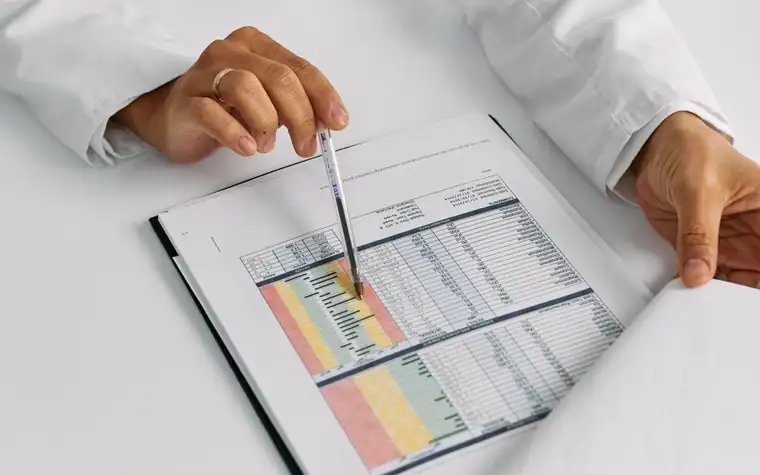
Not every lipid number on the checkup is directly measured
The lipid panel on Korea's national checkup directly measures total cholesterol, HDL, and triglycerides, while LDL cholesterol is normally calculated from those three values using the Friedewald formula. When triglycerides exceed 400 mg/dL, that formula becomes unreliable, so the lab switches to measuring LDL directly instead. Whether the LDL figure on your report is measured or calculated can itself explain why a recheck was recommended.
Four criteria define dyslipidemia
Under the Korean Society of Lipid and Atherosclerosis guidelines, dyslipidemia is defined by any one of the following: total cholesterol ≥200 mg/dL, LDL cholesterol ≥130 mg/dL, HDL cholesterol below 40 mg/dL in men or below 50 mg/dL in women, or triglycerides ≥150 mg/dL. The direction matters: lower is better for total cholesterol, LDL, and triglycerides, while higher is better for HDL.
| Marker | Normal range | Flagged |
|---|---|---|
| Total cholesterol | Under 200 mg/dL | 200 mg/dL or higher |
| LDL cholesterol | Under 130 mg/dL | 130 mg/dL or higher |
| HDL cholesterol | 40 (men) / 50 (women) or higher | Below 40 (men) / 50 (women) |
| Triglycerides | Under 150 mg/dL | 150 mg/dL or higher |

A normal total cholesterol doesn't mean nothing is flagged
If total cholesterol is only slightly over the line but HDL is high, overall risk is sometimes read as lower. The reverse also happens: total cholesterol can sit in the normal range while LDL alone is high or HDL alone is low, and either is still enough to meet the dyslipidemia definition. Reading only the "total cholesterol: normal" line on a report can mean missing a flag in another marker. Other panels, like liver enzymes, use their own separate reference-range format as well, which is why each marker is worth checking individually.
What changed in the 2026 guideline update
The Korean Society of Lipid and Atherosclerosis released an updated 2026 dyslipidemia fact sheet with newer epidemiological data, and in March 2026 the American College of Cardiology and American Heart Association revised their cholesterol management guidelines for the first time in eight years, moving toward lower treatment targets applied earlier. Korea's national checkup recheck criteria, however, are set separately from either society's clinical guideline -- a "recheck advised" note on your report reflects the screening provider's own cutoff, not a treatment guideline threshold.
Family history changes how conservatively the numbers are read
If a parent or sibling was diagnosed with coronary artery disease at a relatively young age (before 55 for men, before 65 for women), a doctor may recommend closer management even when your own numbers sit right at the borderline. An LDL cholesterol well above 190 mg/dL, or several family members with similarly elevated levels, raises the possibility of familial hypercholesterolemia, which is worth flagging to a doctor alongside the report itself -- it isn't something the checkup report alone can determine.
If you're told you need a recheck
The first thing to confirm is whether the test was drawn fasting. Triglycerides spike temporarily right after eating, so an insufficient fasting window can shift the result on a recheck. Next, consider whether smoking, alcohol, or a recent infection could have temporarily skewed the numbers; if none of those apply and the values are still over the line, a follow-up lipid panel and consultation with a doctor is the appropriate next step. Korea's national checkup includes a lipid panel every four years starting at age 24 for men and age 40 for women, but if you've been flagged for a recheck, it's safer to follow up separately rather than wait for the next scheduled checkup.

If cost is a concern
If further testing or medication is recommended and cost is a barrier, it's worth checking programs tied to income eligibility, such as catastrophic medical expense support or emergency welfare medical assistance. Both have different income and asset thresholds and different application channels, so eligibility needs to be checked individually.
Summary
1) Check total cholesterol, LDL, HDL, and triglycerides separately on your report 2) Rule out temporary factors like fasting status and recent illness 3) If flagged for a recheck, retest within the recommended window 4) If values stay elevated on repeat testing, get a full lipid panel and consult a doctor 5) If cost is a concern, check income-based medical assistance programs in that order.
This article is based on Korea's national health checkup standards and the Korean Society of Lipid and Atherosclerosis guidelines and is general information; it does not replace diagnosis or treatment. Please consult a doctor for interpretation of your individual results and any treatment decisions.
All content is fact-checked under our editorial standards.