
Probation Pay at 90% of the Minimum Wage Is Lawful Only If All Three Conditions Are Met
When you get your first payslip and someone says "it's 90% during probation," whether that is lawful is decided by Article 5(2) of the Minimum Wage Act, not by company policy. And the provision does not permit the reduction broadly. Three conditions are attached, and if even one is missing, the full minimum wage must be paid, probation or not. Plenty of workplaces apply the 90% figure out of habit without checking all three, and the shortfall becomes unpaid wages.
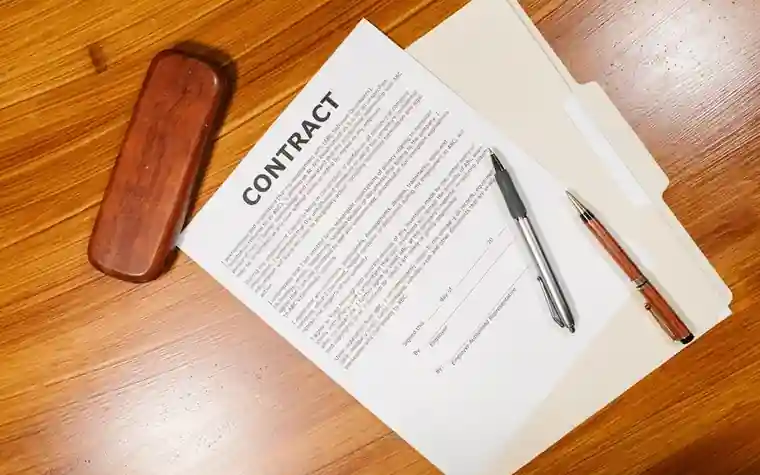
Three conditions, all of which must be met
They are: first, the employment contract must run for at least one year; second, you must be within three months of the day probation started; third, you must not be a simple-labour worker. If any one of the three fails, the reduction is not available. And even where it is available, it does not apply automatically — it can be used only where the probation period and the probation-period wage are written into the employment contract. If the employer simply said "you're on probation" and paid 90%, there is no basis for it at all.
One year or more — an 11-month fixed-term contract does not qualify
This is the condition that fails most often. Employers sometimes hire on a fixed term of 11 or six months and still apply 90% for the first three. That does not meet the requirement. A worker engaged under a contract for a fixed term of less than one year is excluded from the reduction. For open-ended permanent hiring the condition is not an issue. If you are on a fixed-term contract, start with the contract-term box on the first page.
The three months run from the day probation starts
An employer may set a probation period of six months; that in itself is allowed. But the window in which wages may be reduced runs only three months from the day probation began. From the fourth month the full minimum wage is due even if you are still formally on probation. Agreeing to an extension of probation does not extend the reduction along with it. This is a mechanical, date-based test, much like counting statutory annual leave days, so if your start date and your probation start date differ, get that difference into the contract too.
Simple-labour workers get 100% even during probation
This rule took effect on 20 March 2018. Workers engaged in occupations designated and published by the Minister of Employment and Labor as simple labour cannot have their wages reduced during probation. The notice defines simple labour as work falling under Major Group 9 (elementary occupations) of the Korean Standard Classification of Occupations. Construction and transport labourers, parcel delivery workers, cleaning and sanitation workers, kitchen assistants and petrol station attendants fall inside it. The legislative intent is plain: to stop "probation" being attached to work that requires no skill-building period simply to cut the wage.

What the numbers look like in 2026
The 2026 minimum wage is 10,320 won an hour, and the monthly equivalent is 2,156,880 won on the standard basis of a 40-hour week and 209 monthly hours. Apply 90% and you get 9,288 won an hour and 1,941,192 won a month. The gap is 215,688 won a month, or 647,064 won across a full three months. That is not trivial, and a reduction that fails the conditions is unpaid wages in exactly that amount. Two things to check on the payslip: the stated hourly rate and the hours. If the hourly figure sits below 9,288 won, the reduction has exceeded even its own ceiling.
Dismissal during probation — notice and justification are separate questions
Employers sometimes decline to confirm permanent employment after a probation review. Two things get conflated here. Article 26 of the Labor Standards Act requires 30 days' notice of dismissal or payment of at least 30 days of ordinary wages, but makes an exception where the period of continuous employment is less than three months. So refusing confirmation after three months requires notice or notice pay. Complying with the notice rule, however, does not make the dismissal justified. Refusal to confirm is still a dismissal, so it needs an objective and reasonable ground, and that ground has to exist in the evaluation record. The logic is the same as the line between a recommended resignation and a dismissal.

What probation does not exempt
Being allowed to reduce the wage is not the same as being allowed to lower everything else. Weekly holiday allowance accrues regardless of probation status. That is precisely why the monthly figure of 2,156,880 won is calculated on 209 hours: 209 is 174 actual working hours plus roughly 35 paid weekly-holiday hours, so the allowance is already inside it. The four major social insurances likewise cannot be deferred on the ground that someone is on probation. Enrolment must be reported from the start date, and contributions are assessed on what is actually paid during probation. Premiums for overtime, night and holiday work are not waived during probation either.
It is fairly common for "three months' probation" to be said aloud while the contract says nothing. In that case there is no basis for a reduction and the full minimum wage is due from day one. Conversely, a contract that mentions probation but only in the form of "wages during probation shall be determined by the company," with no period specified, is unlikely to be upheld as written. Article 17 of the Labor Standards Act requires the components of the wage, the method of calculation and the method of payment to be specified and given in writing, and probation-period wages are covered. If you never received a copy of your contract, that is the first thing to ask for. What survives a later dispute is the paperwork.
Probation does not stop the clock on length of service, either. The probation period is in principle included in continuous employment, so it counts towards the one year used for severance pay and towards the period used to calculate annual leave. Even if you were formally confirmed after three months, service runs from your original start date. Because severance pay is calculated on average wages, the reference period is the final three months before leaving, so low probation-period pay does not directly drag the severance figure down.
The order to check things in
1. Check whether the contract term is one year or more. 2. Check whether the probation period and probation wage are written into the contract. 3. Check whether your job falls under Major Group 9 of the standard occupational classification. 4. Calculate whether the hourly rate on your payslip has dropped below 90% of the minimum wage. 5. If the conditions fail and the reduced amount has already been paid, the difference is unpaid wages. Ask the employer to correct it, and if that fails you can file a complaint with the competent regional office of the Ministry of Employment and Labor. If you have left and the employer can no longer pay, there is also the substitute payment route. This article sets out general standards and does not substitute for legal advice on an individual case.
All content is fact-checked under our editorial standards.