
Power Banks on Planes: Two Per Person, No Use or Charging On Board Since April 20, and How to Work Out Your Battery's Wh
When you pack for an overseas trip, it is easy to lose track of how many power banks you may bring. The rules changed on April 20, 2026, so showing up at the airport with the numbers you used to know can cause trouble. Based on the Ministry of Land, Infrastructure and Transport press release, this guide covers how many you can carry, what is now banned in flight, and how to check your own battery's capacity.
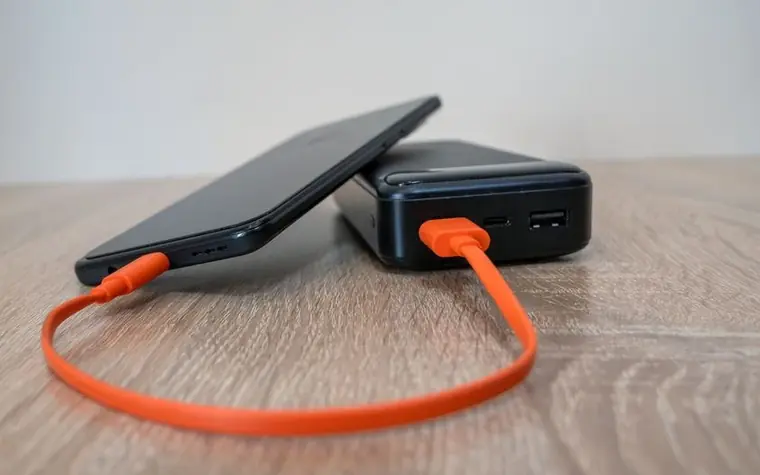
Since April 20: two per person, and no use on board
There are two key points. You may carry up to two power banks per person into the cabin, and using or charging them during the flight is prohibited.
The capacity limit is 160Wh, roughly 43,000mAh. Korea proposed this safety standard to the International Civil Aviation Organization (ICAO), which adopted it as an international rule.
The standard applies to both domestic and international flights. Korea previously allowed more units domestically, so if you usually carry three or four, the count is the first thing to cut.
Two separate actions are banned
The press release says both charging the power bank itself and using the power bank to charge another device such as a smartphone are prohibited.
That means no plugging a power bank into a seat outlet and no connecting a cable to top up your phone from it. If you want to charge your phone in flight, ask the airline separately whether the seat's own power supply is available.
How to work out your power bank's Wh
Many products list only mAh, not Wh. Use mAh × voltage (V) ÷ 1,000 = Wh. Power bank voltage is usually printed as 3.7V.
In the government's own example, a 20,000mAh unit at 3.7V is 74Wh. A 30,000mAh unit comes to 111Wh, which is over 100Wh.
43,000mAh at 3.7V is about 159Wh, right at the 160Wh limit. Anything larger is safest to treat as not allowed in the cabin.
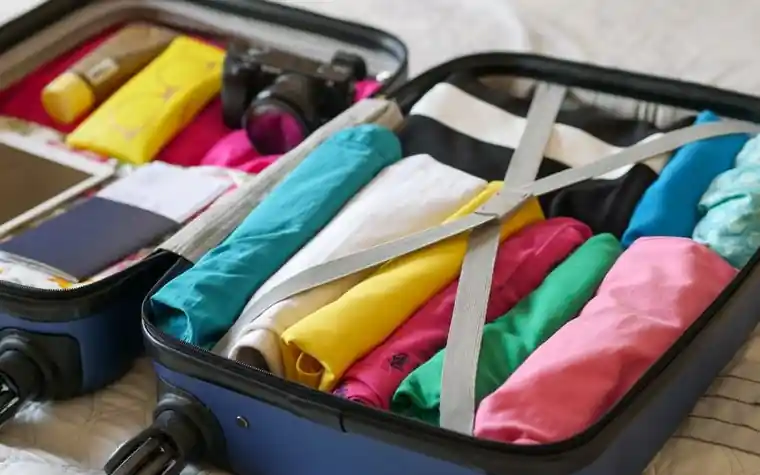
Over 100Wh? Ask your airline before departure
Under the earlier guidance, units of 100Wh or less could be carried up to a set number, while units above 100Wh up to 160Wh needed airline approval, with a maximum of two.
How that approval step works after the April revision may be explained differently by each airline. If you are bringing a large unit, check with your airline's customer service or notices first.
Units above 160Wh were already not allowed under the earlier guidance.
Not in the overhead bin: keep it on you or in the seat pocket
There is also a storage rule. For power banks of 100Wh or less, take a measure against short-circuiting, meaning terminals touching each other, and then keep them on your body or in the seat-back pocket. The overhead bin is not allowed.
Short-circuit protection means taping over the terminals or putting each unit in its own plastic bag. The rule has its background in a January 2025 fire involving lithium-ion batteries on an Air Busan aircraft.
Think of it as keeping the battery somewhere visible rather than hidden inside a bin.
A checklist before you pack
Sorting this out at home helps you avoid surprises at the airport. Based on the ministry's guidance and your airline's notices, the order is as follows.
First, take out every power bank and convert its mAh and voltage to Wh.
Second, from those at 160Wh or less, pick only two. Leave the rest at home or use them only at your hotel.
Third, if any unit is over 100Wh, ask the airline whether you may bring it.
Fourth, tape the terminals or put each in a plastic bag, and keep them within reach in your cabin bag.
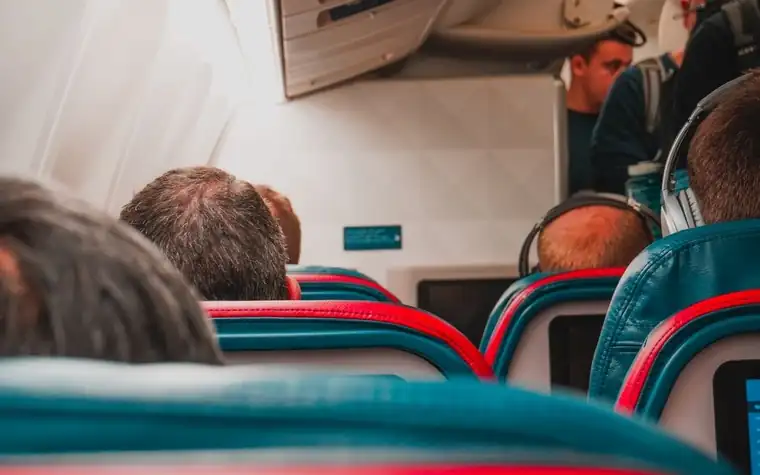
If you worry about your phone battery in flight
Since you cannot use a power bank on board, the simplest preparation is to charge your phone fully before departure. Charging stations at the gate or in an airport lounge are another option.
Lowering screen brightness and turning on airplane mode makes the battery last much longer on long flights. Our everyday tips are in 7 settings that make a smartphone battery last.
If you use public Wi-Fi at the airport, see how to use public Wi-Fi safely as well.
Gadgets bought abroad and your power banks
When you bring electronics home from a trip, anything with a battery, like a power bank, still has to follow the cabin rules. For duty-free limits and the customs ID, see the personal customs code renewal guide, and for warranty rules if an appliance breaks, see the warranty period guide.
How the rules are applied can differ by airline and airport, so check the ministry's notice and your airline's notice once more before you leave.
All content is fact-checked under our editorial standards.